Deutscher Kleinempfänger DKE 38 — 1938
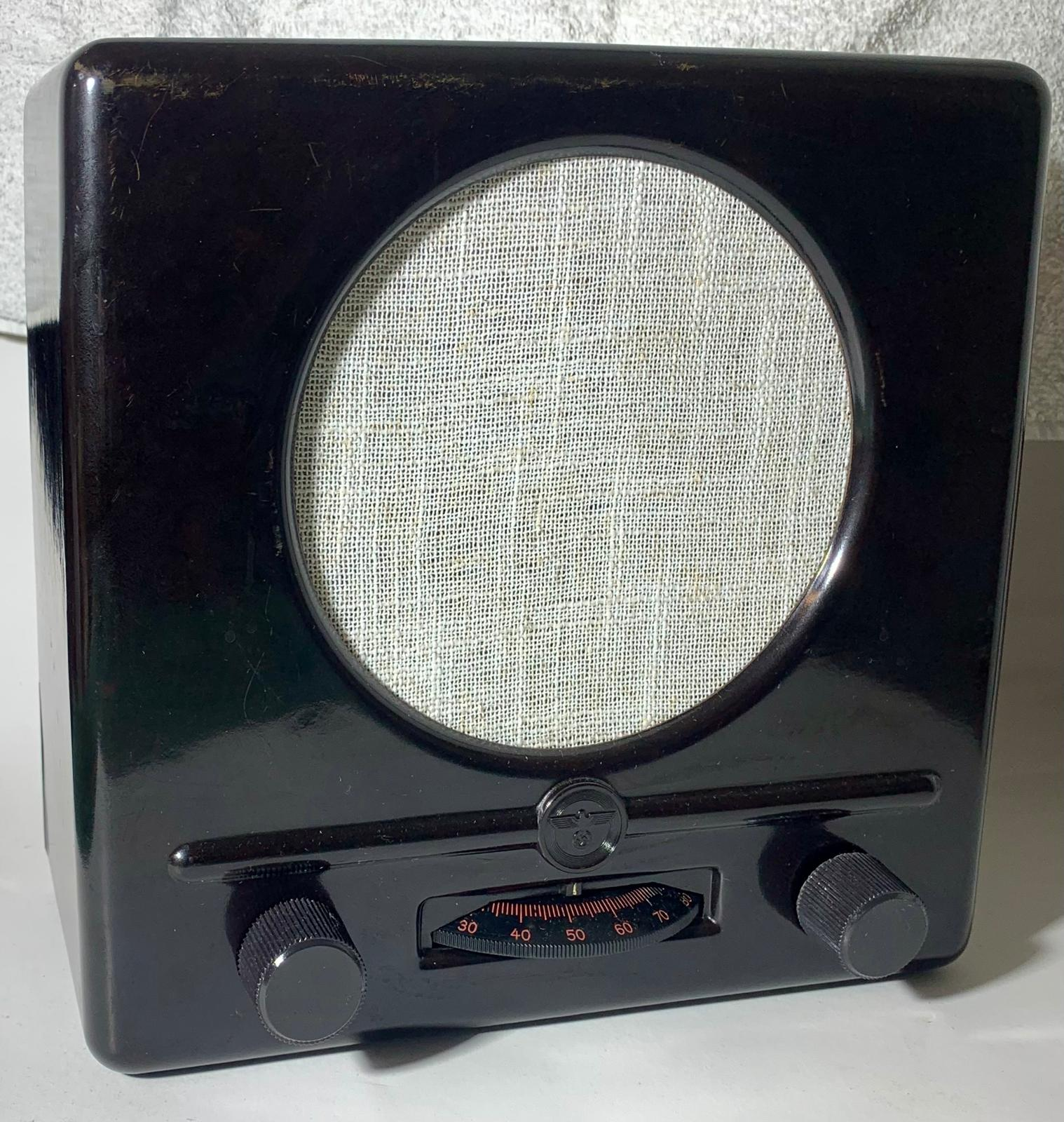
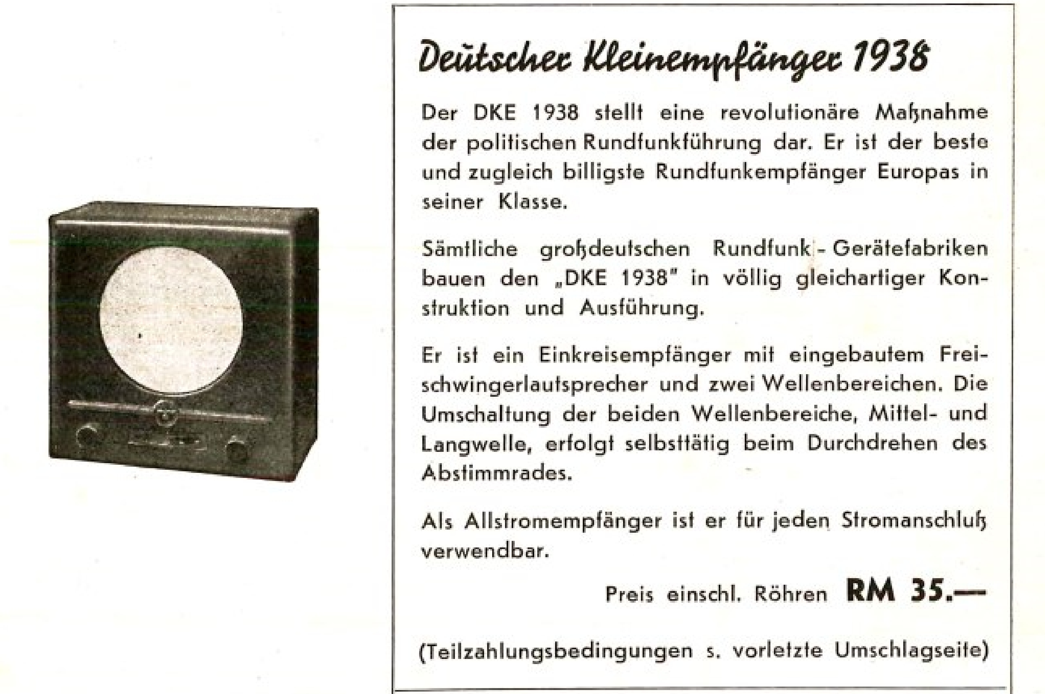
The Deutscher Kleinempfänger DKE 38 is one of the most historically charged German radio receivers of the late 1930s. Introduced in 1938, it was developed as an even simpler and cheaper companion to the better-known Volksempfänger. While the Volksempfänger was already designed as an affordable mass-market radio, the DKE38 reduced the concept further: fewer parts, a very compact Bakelite cabinet, and only the essential circuitry required for reception on long wave and medium wave.
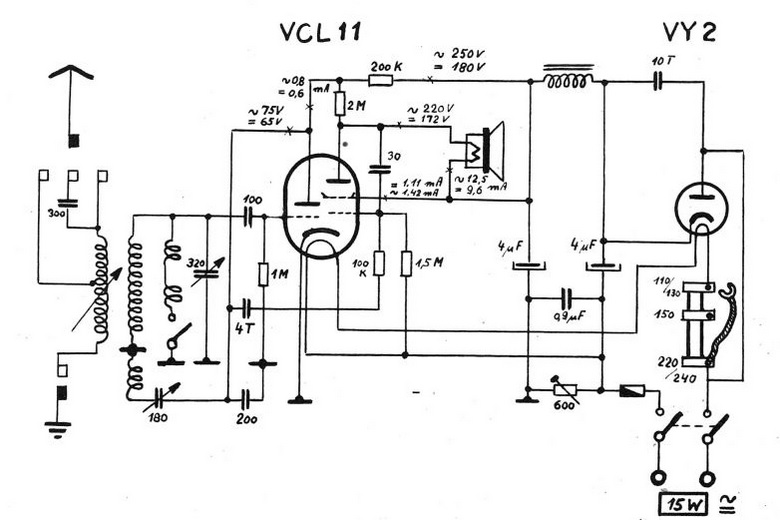
Technically, the DKE 38 is a very simple regenerative TRF receiver. It uses only two valves: the VCL11, a combined detector/audio output valve, and the VY2 rectifier. The set is an AC/DC receiver without a mains transformer, which made production cheaper but also means that the chassis can be connected directly to the mains depending on plug orientation. For this reason, servicing such a radio always requires great care and proper isolation equipment.
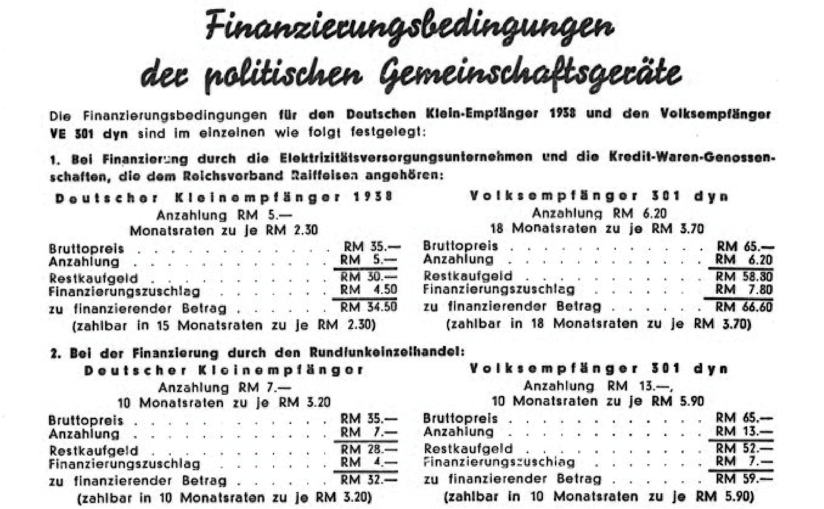
The DKE 38 was sold for 35 Reichsmark, making it considerably cheaper than the larger Volksempfänger models. Its purpose was not high-fidelity listening or long-distance reception, but to provide a low-cost way of bringing radio broadcasts into as many households as possible. In that sense, it is both a radio receiver and a historical document of its time.
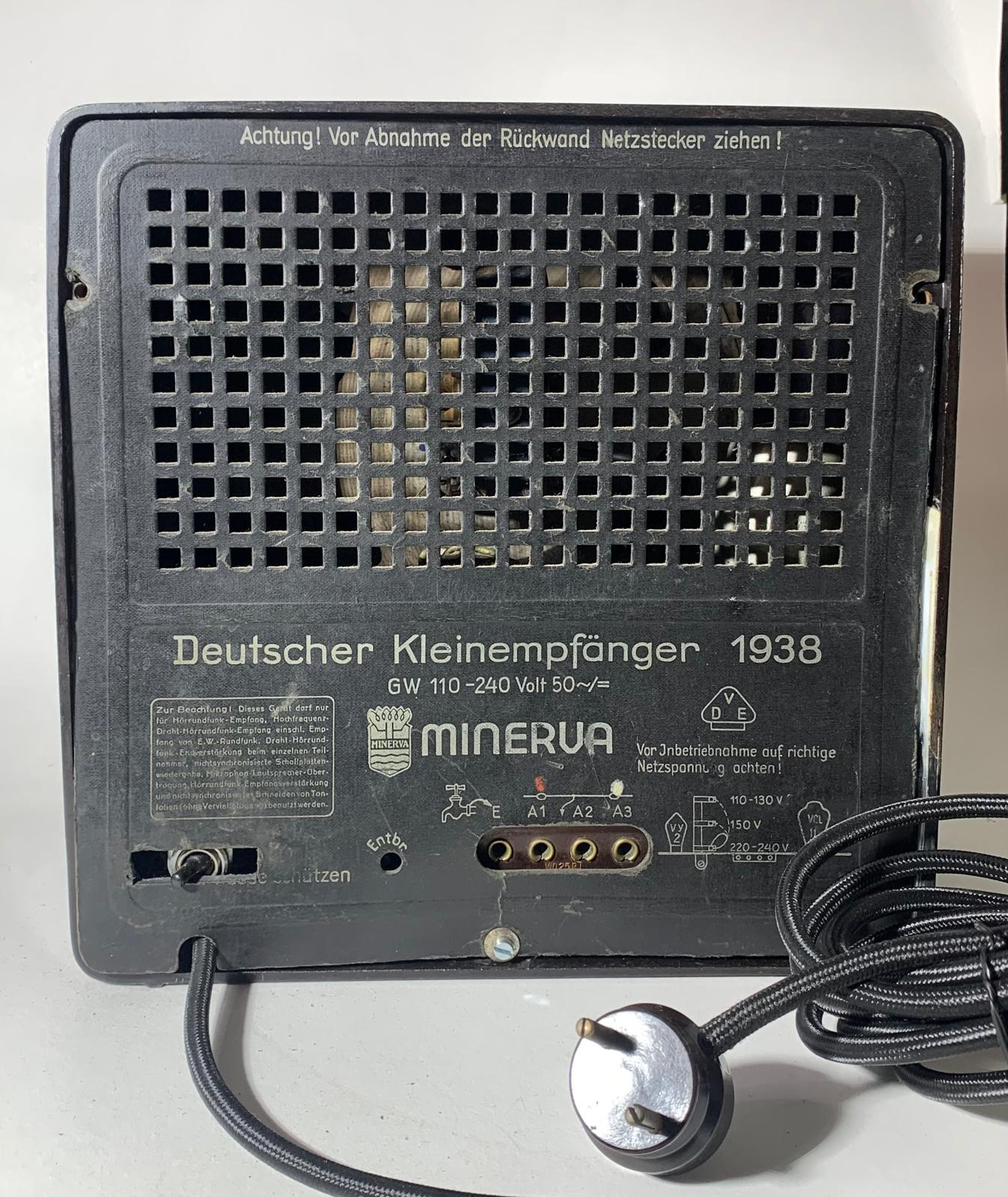
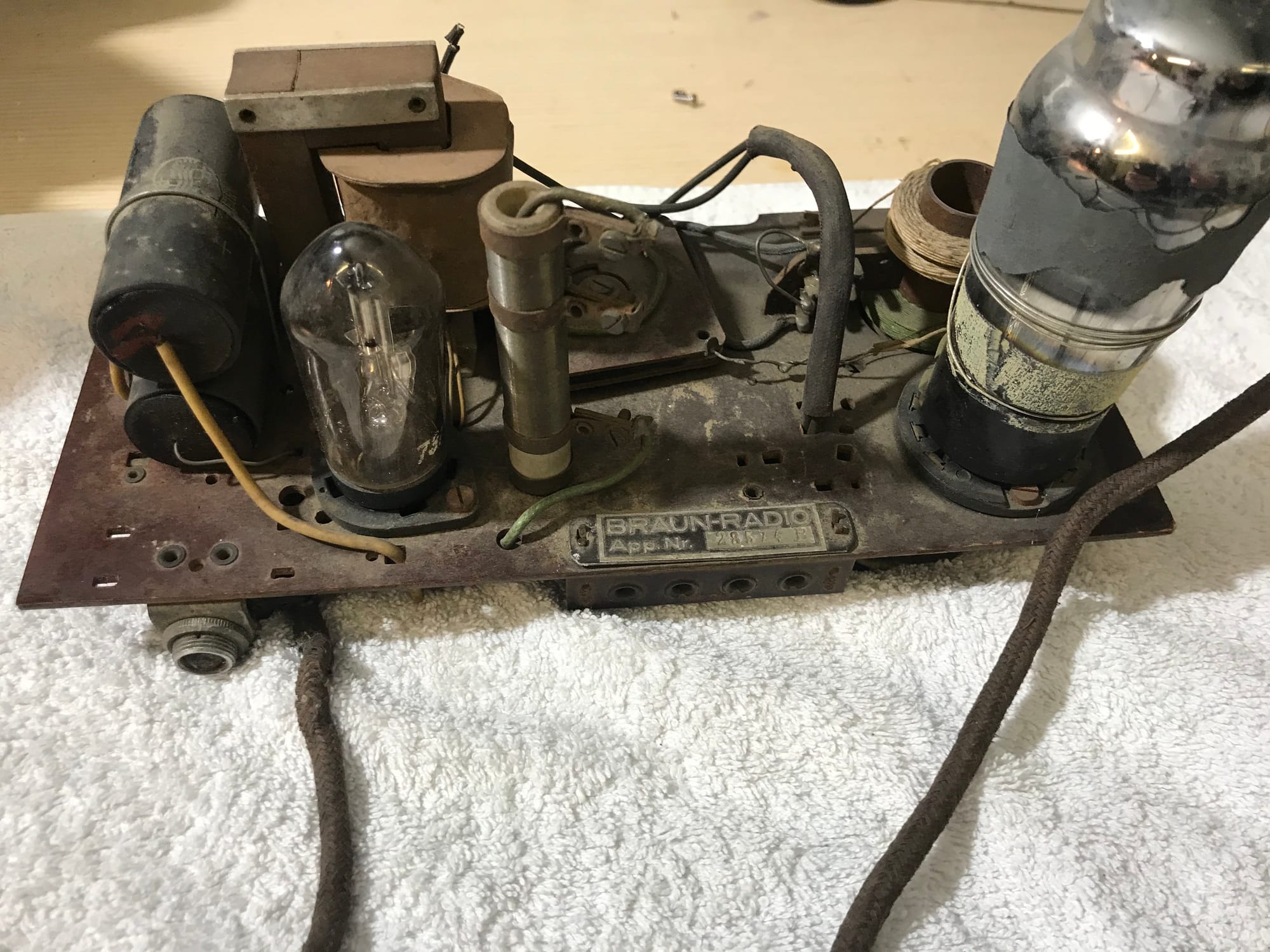
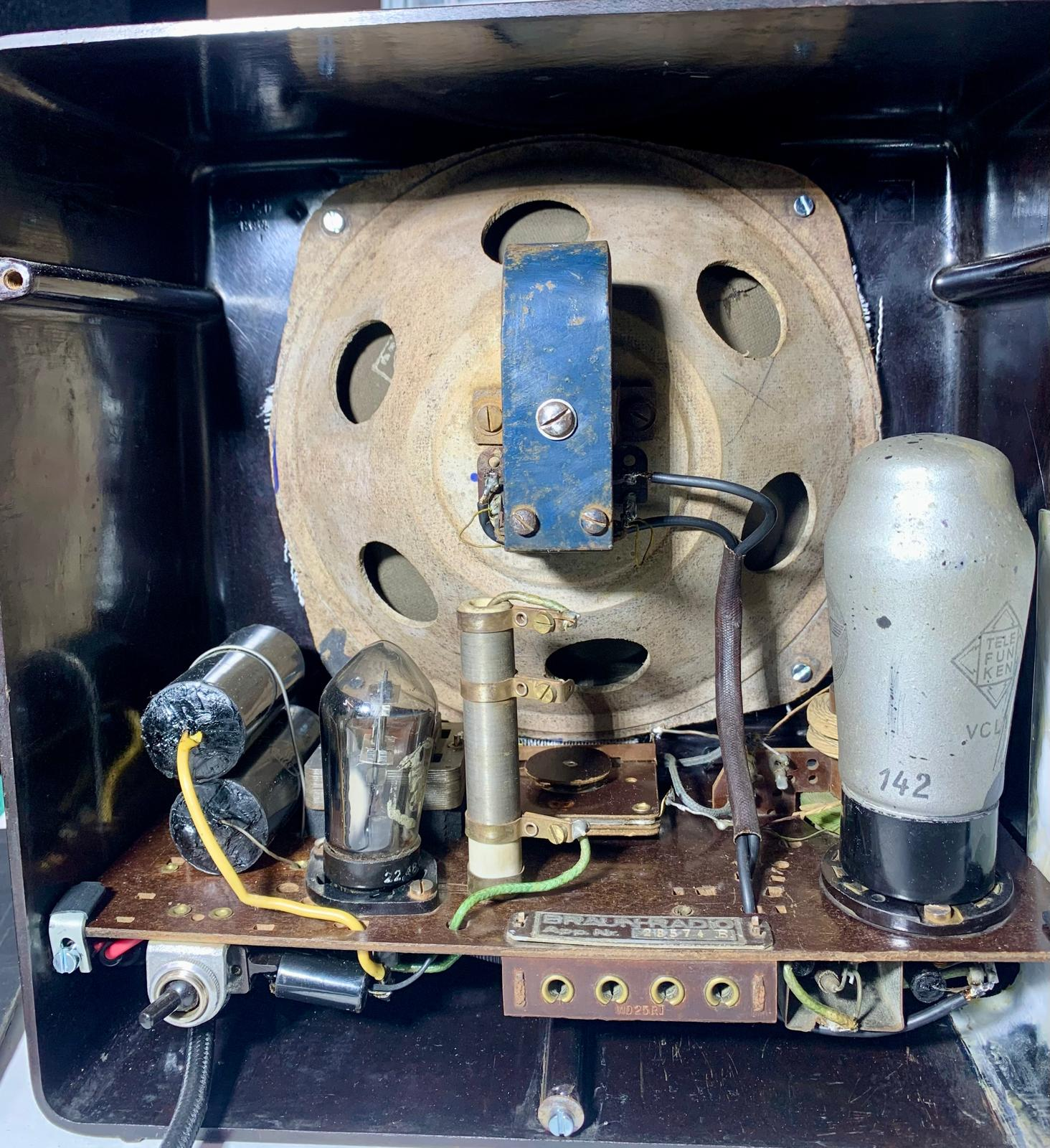
This particular set is especially interesting because the chassis and Bakelite cabinet are Braun, while the rear cover appears to have been replaced at some point with a Minerva back panel. Such details are not unusual on radios of this age: over decades of use, storage and repair, parts were often exchanged simply to keep the set complete and functional.
Restoration Notes
The restoration of this DKE 38 was carried out with the aim of preserving the original appearance as much as possible.
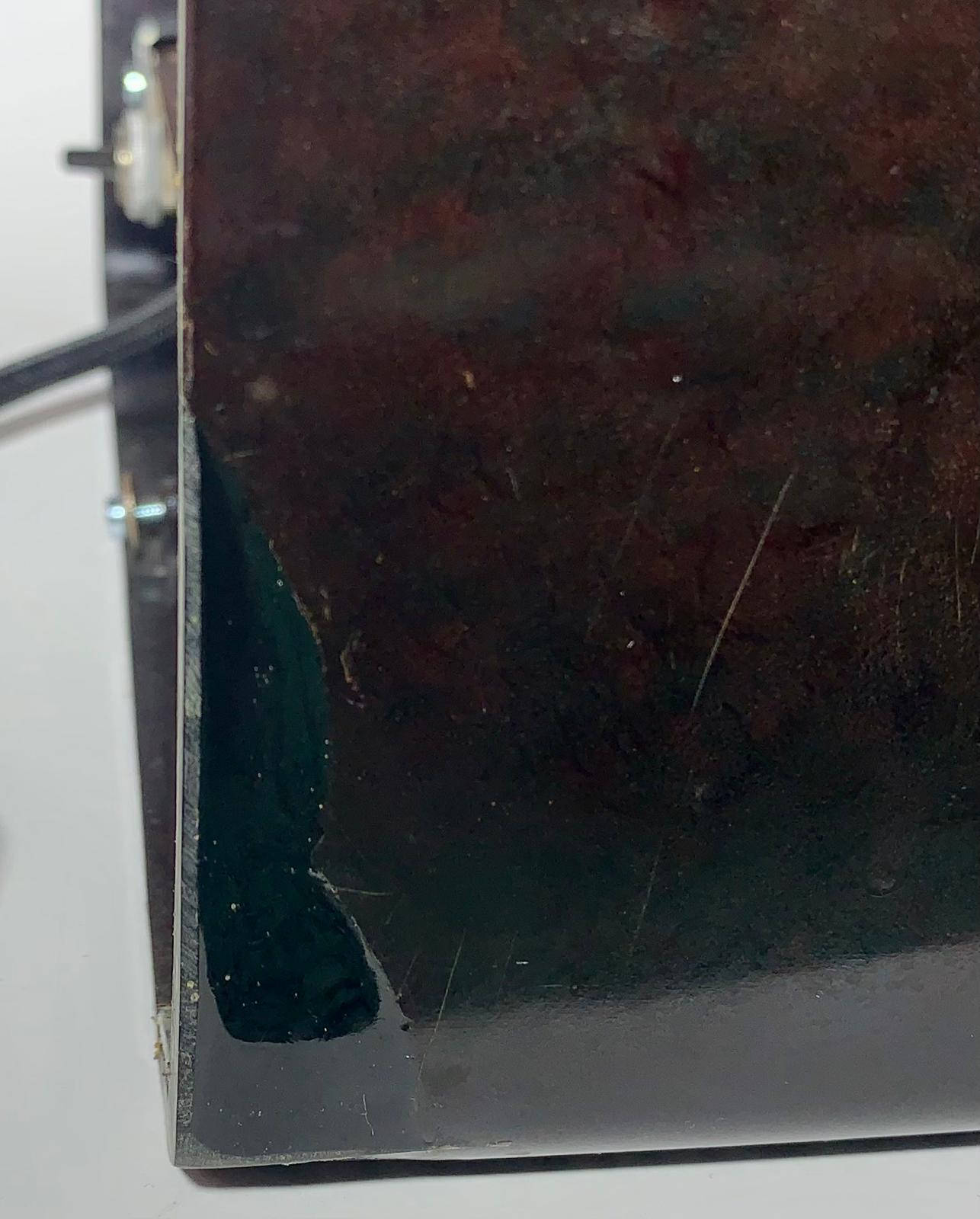
The radio was carefully cleaned inside and outside. The Bakelite cabinet was cleaned thoroughly, while avoiding overly aggressive polishing in order to preserve its aged surface and historical character. One broken corner of the Bakelite cabinet was repaired with epoxy resin. The colour tone does not match perfectly, but the repair is stable and visually acceptable.
The old mains cable was replaced with a new one for safety reasons. As with all AC/DC sets of this type, the electrical design remains historically original, but the radio must still be treated as a non-isolated mains-powered device.
The original capacitors were restored in the usual sympathetic way: the old capacitor bodies were opened, modern components were installed inside, and the cases were carefully resealed. This keeps the internal appearance close to the original construction while improving electrical reliability.
The VCL11 valve was found to be defective or too weak and was replaced with a working example. Since the VCL11 was specially associated with the DKE38 design, finding a good replacement is an important part of bringing such a set back to life.
The tuning capacitor required special attention. It had to be removed from the chassis, cleaned properly, and then reinstalled. After cleaning, the tuning mechanism worked reliably again.
The original front control knobs were no longer present. They were replaced with suitable reproduction parts, chosen to match the original appearance of the receiver as closely as possible. The main switch was broken and had to be replaced.
The old speaker cloth was replaced with a new one. This greatly improves the visual appearance while keeping the front of the radio close to its original style.
Result
After restoration, the radio is again complete, clean and functional. It remains a very simple receiver by design, but that simplicity is exactly what makes the DKE 38 so interesting. It shows how far radio engineering could be reduced when cost, mass production and political purpose were the main design goals.
The Braun cabinet and chassis, together with the later Minerva back panel, also tell their own story. This is not a perfectly untouched museum object, but a real surviving radio that has lived through decades of use, repair and replacement — and is now preserved as a working historical piece.
Technical Data
| Item | Data |
|---|---|
| Model | Deutscher Kleinempfänger DKE 38 |
| Year | 1938 |
| Manufacturer | Braun |
| Reception principle | TRF / straight receiver with regeneration |
| Wavebands | Long wave and medium wave |
| Valves | VCL11, VY2 |
| Number of tuned circuits | 1 AM tuned circuit |
| Power supply | AC/DC mains set, no mains transformer |
| Loudspeaker | Magnetic loudspeaker |
| Cabinet | Bakelite |
Circuit Diagram
References and Further Reading
- Radiomuseum.org — Deutscher Kleinempfänger DKE38
- Radiomuseum.org — Braun Deutscher Kleinempfänger 1938 DKE38
- Museum Digital Berlin — Deutscher Kleinempfänger Braun DKE38
- Radiomuseum.org — VCL11 valve information
- Norbert Maier — Der Deutsche Kleinempfänger DKE 38
Pictures
After decades of silence, the DKE 38 is receiving radio stations again.