QO-100 Ground Station
The OE6VAG QO-100 ground station supports both Narrowband (NB) and Wideband / Digital Amateur Television (DATV) operation via the Es'hail-2 / QO-100 amateur radio satellite. In addition to local operation, the Wideband receiving station is available as a public, browser-based DATV receiver.
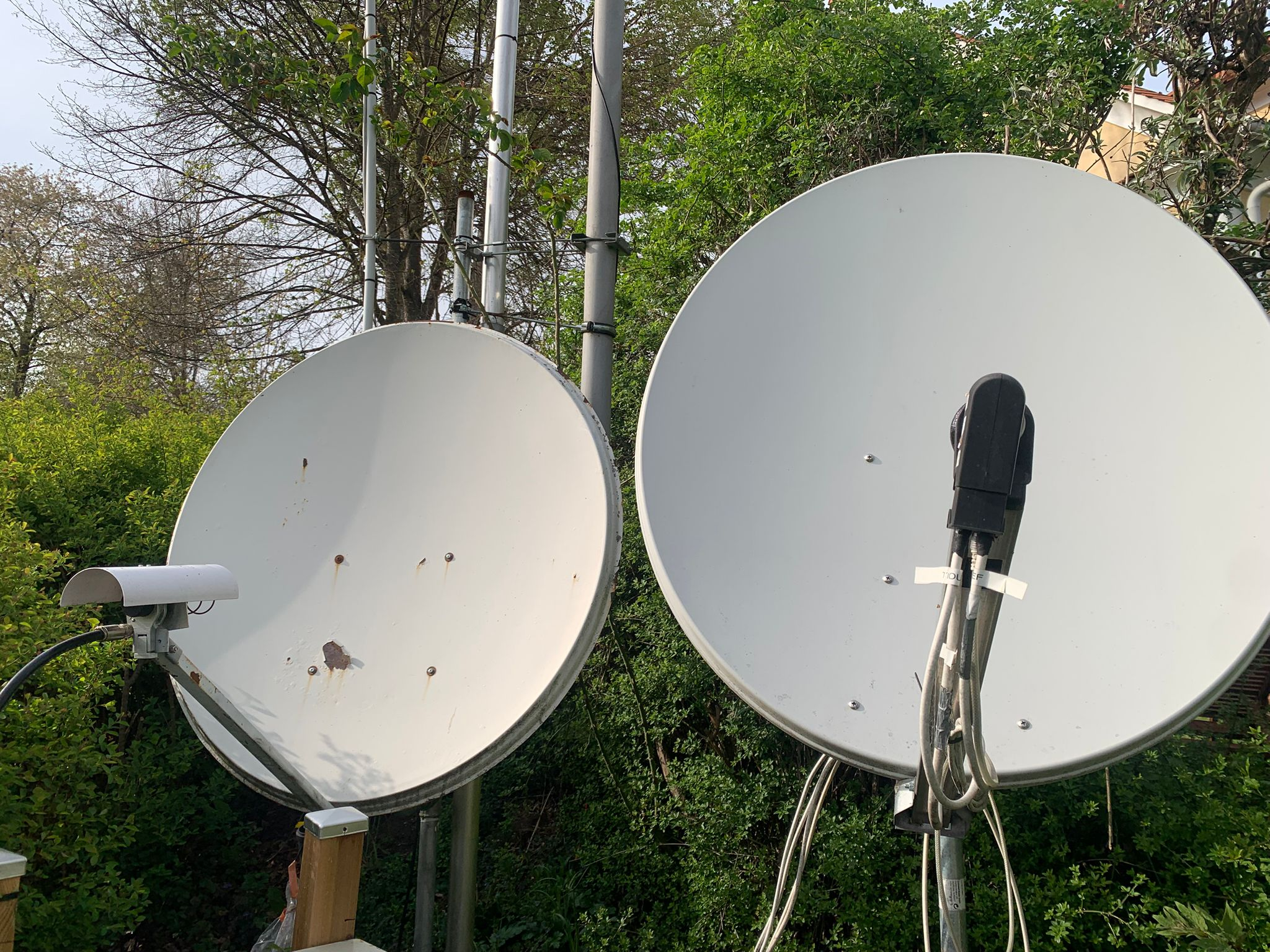
🛰️ Receive Setup
Reception is based on a dedicated 130 cm satellite dish with a modified multi-output LNB. Narrowband and DATV reception use separate LNB outputs, allowing the individual receiving chains to remain independent.
Narrowband
The Narrowband transponder is received with an ADALM-Pluto SDR. Operation is primarily performed from a Windows workstation using SDR-Console.
Typical modes include SSB, CW and digital amateur-radio modes.
Wideband / DATV
DATV reception uses a MiniTiouner Pro TS2 connected to its own LNB output.
For local operation the receiver can be used with software such as OpenTuner or MiniTioune. For public web operation it is controlled by a dedicated Linux system running Longmynd.
🌐 Public QO-100 DATV Web Receiver
Watch QO-100 DATV directly in your browser
The Wideband receiver can be accessed remotely without installing dedicated DVB-S/S2 software. Active DATV carriers can be selected from the spectrum display and received video is delivered directly to a normal web browser.
Open QO-100 DATV Web ReceiverThe web receiver uses the same MiniTiouner hardware as the local DATV station, but the complete signal processing chain is distributed across several Linux systems.
The MiniTiouner and Longmynd are located on a small receiver gateway close to the radio equipment. The DVB transport stream is sent over the local network to a separate processing server. There, FFmpeg converts the incoming programme into a browser-compatible H.264/AAC HLS stream. The public web server finally delivers the receiver interface and video stream through the OE6VAG website.
| RF source | Dedicated output of the QO-100 multi-output LNB |
|---|---|
| DATV receiver | MiniTiouner Pro TS2 |
| DVB-S/S2 software | BATC Longmynd on Linux |
| Video processing | FFmpeg with hardware-assisted H.264 transcoding |
| Web delivery | HLS over HTTPS |
| Operation | On demand, single active receiver session |
| Maximum session | 60 minutes |
| Access control | Human verification and server-side session control |
On-demand operation
The public receiver is intentionally not operated continuously. Starting a web session powers the required receiver hardware, reserves the station for the current visitor and starts the DVB-S/S2 processing chain.
When the session ends, reaches its time limit or the browser disappears for an extended period, the receiving chain is shut down again automatically. An additional hardware-side power timeout provides a second level of protection.
Tuning and spectrum display
The web interface contains a Wideband spectrum overview. A DATV carrier can be selected directly from the spectrum and the receiver automatically applies the corresponding tuning and symbol-rate parameters. A direct tuning option for the QO-100 DATV beacon is also available.
The public interface controls only the receiving chain. It has no connection to the QO-100 transmit controls.
📡 Transmit Setup
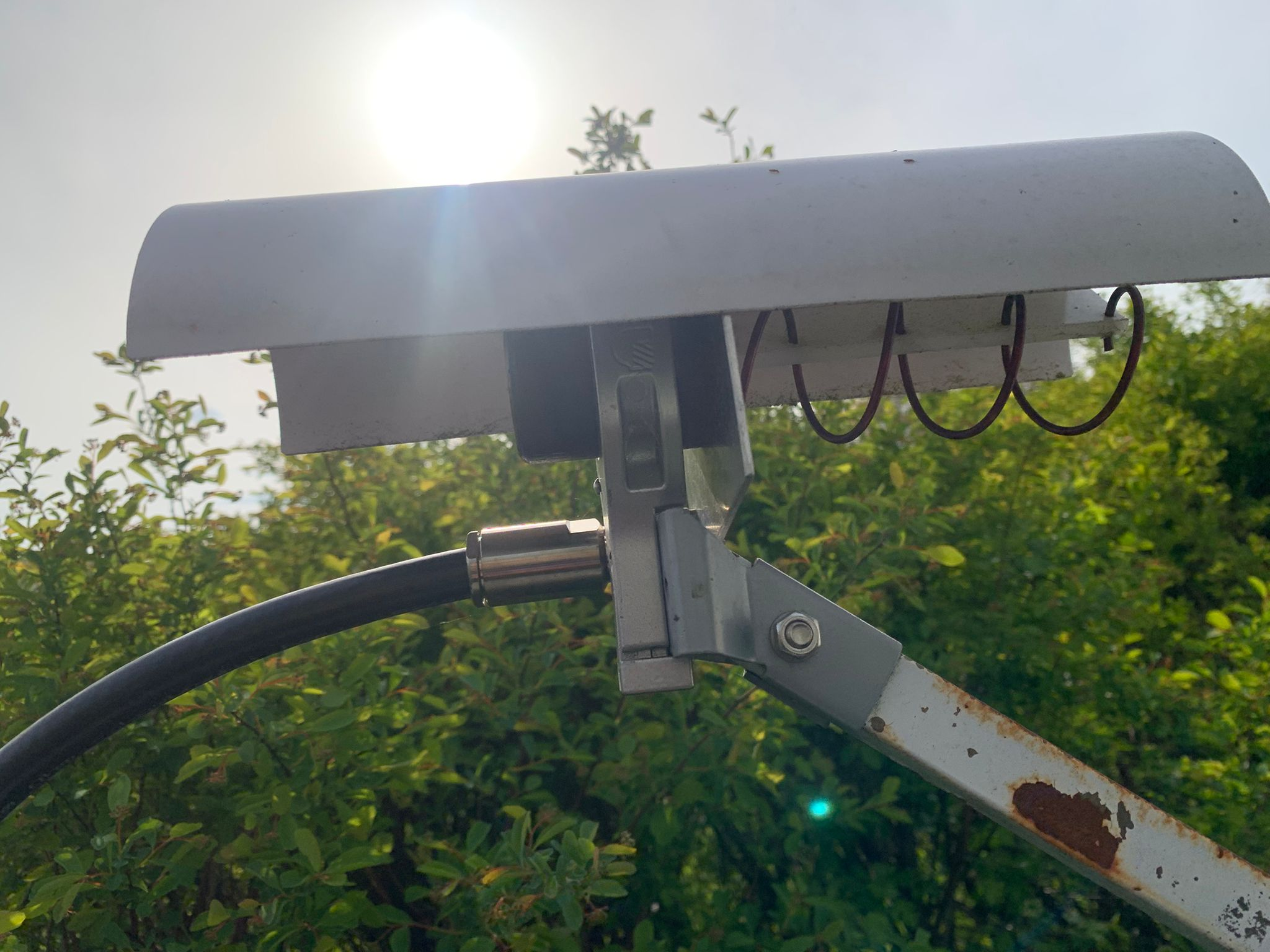
Narrowband
Narrowband transmission uses the ADALM-Pluto as the SDR. The RF path is:
ADALM-Pluto → CN0417 → HP 8762 coaxial switch → power amplifier → 130 cm uplink dish
The station is used for SSB, CW and digital-mode operation through the QO-100 Narrowband transponder.
Wideband / DATV
DATV transmission is based on a Portsdown controller and a LimeSDR Mini 2.0.
The RF path is:
LimeSDR Mini 2.0 → driver amplifier → HP 8762 coaxial switch → power amplifier → 130 cm uplink dish
OBS Studio is used as one of the main programme sources for DVB-S/S2 transmissions.
🧭 Frequency Stability
Stable frequency references are important for both QO-100 transponders.
The ADALM-Pluto is stabilized from an external Leo Bodnar GPSDO. The modified LNB uses a separate DXPatrol GPS-disciplined reference system. This significantly reduces frequency drift and improves reliable operation of narrowband and digital television signals.
The GPS-disciplined reference equipment is part of the switched station hardware. A short stabilization period after power-up is therefore normal.
🔀 TX Path Switching
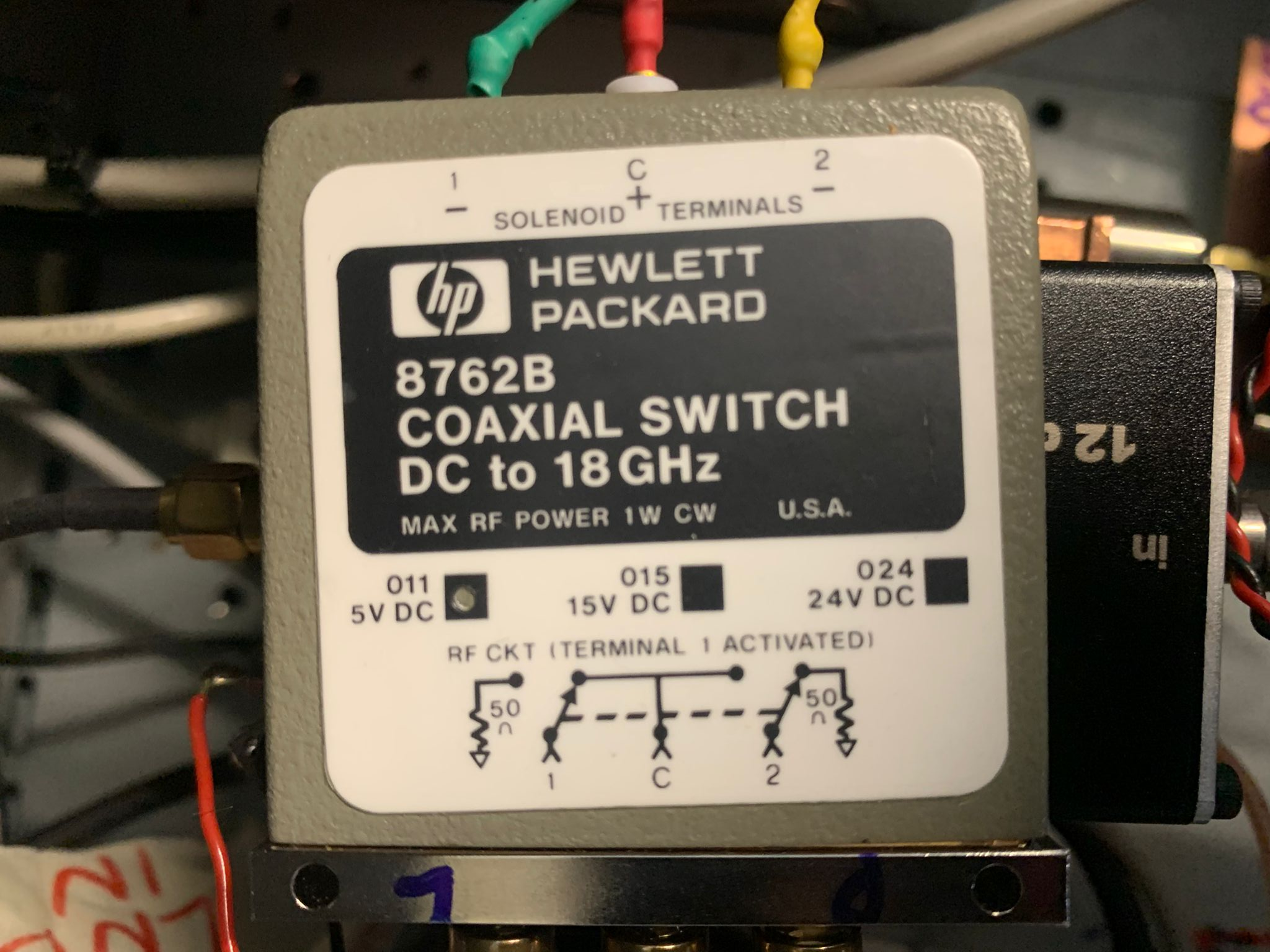
Narrowband and DATV transmissions use different SDR sources, while sharing the high-power RF chain.
An HP 8762 coaxial switch selects between the Pluto and LimeSDR paths. The switch is controlled from the Portsdown Raspberry Pi.
The switching arrangement also prevents the typical initial LimeSDR transmit transient from reaching the power amplifier.
💧 Power Amplifier and Cooling
The QO-100 uplink power amplifier is installed close to the dish in order to keep the high-frequency feed line short. It uses an LDMOS-based amplifier chain and is cooled by a closed-loop liquid cooling system.
Heat is transported to a water-to-air heat exchanger with an actively controlled fan. The cooling system is designed for extended DATV operation, where the amplifier can be subjected to a significant continuous RF load.
📊 Monitoring and Telemetry
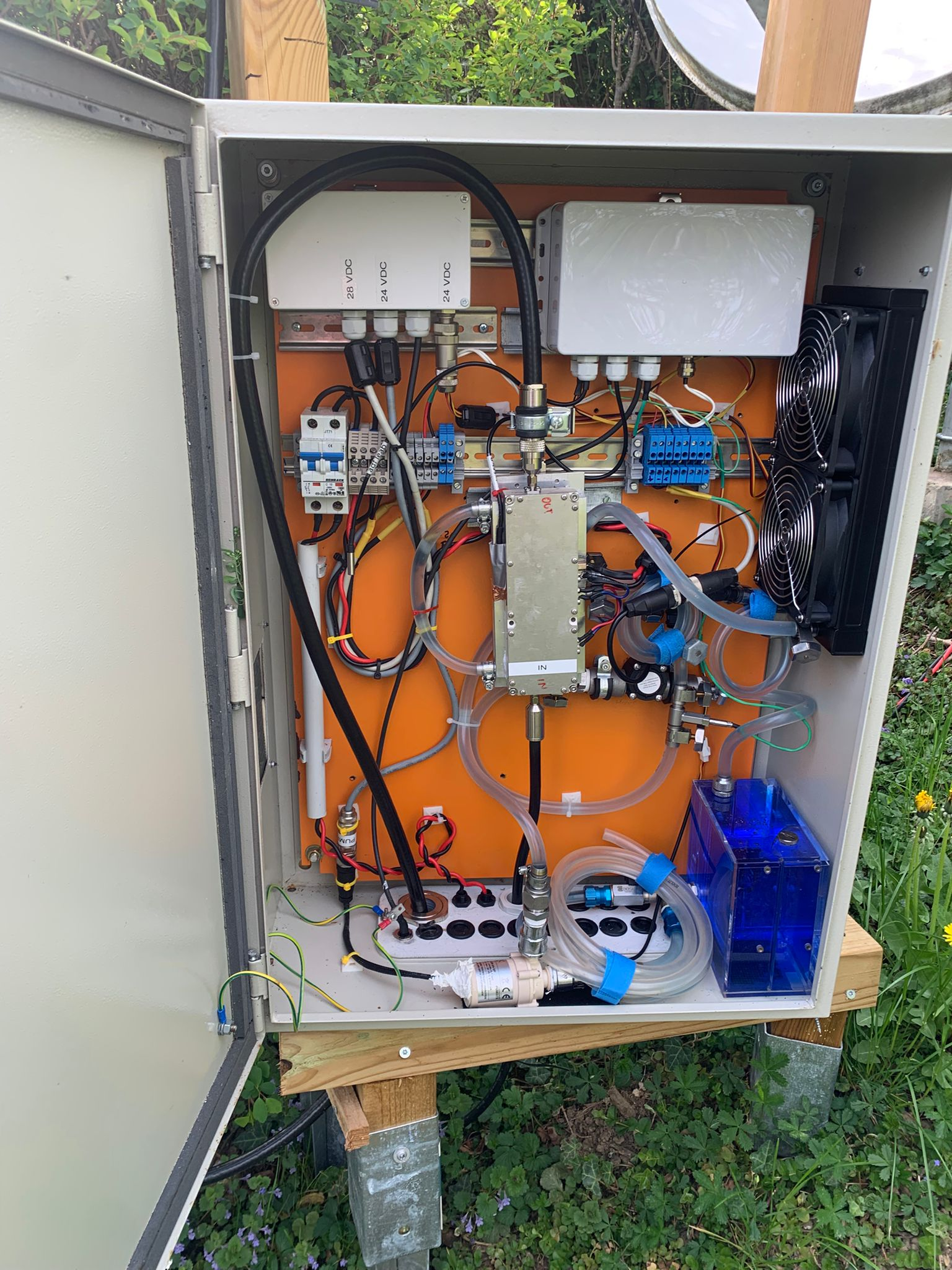
The remotely located PA and cooling system are monitored continuously during operation.
| PA monitoring | Power-amplifier temperature |
|---|---|
| Cooling system | Coolant inlet and outlet temperature |
| Flow monitoring | Coolant flow rate |
| Data acquisition | Microcontroller-based acquisition |
| Communication | Modbus to a Linux monitoring computer |
| Visualization | Custom Python-based monitoring interface |
🔧 Ongoing Development
The QO-100 station is a continuously evolving amateur-radio project. Receive and transmit paths are intentionally modular so that individual components can be tested or replaced without rebuilding the complete station.
Recent work concentrated on the public DATV receiver: Linux-based MiniTiouner operation, reliable DVB-S/S2 reception, browser video delivery, automatic tuning, session management and power control.
Further work will continue on both the DATV transmit chain and the station's RF and monitoring infrastructure.