Siemens & Halske Volksempfänger VE301W
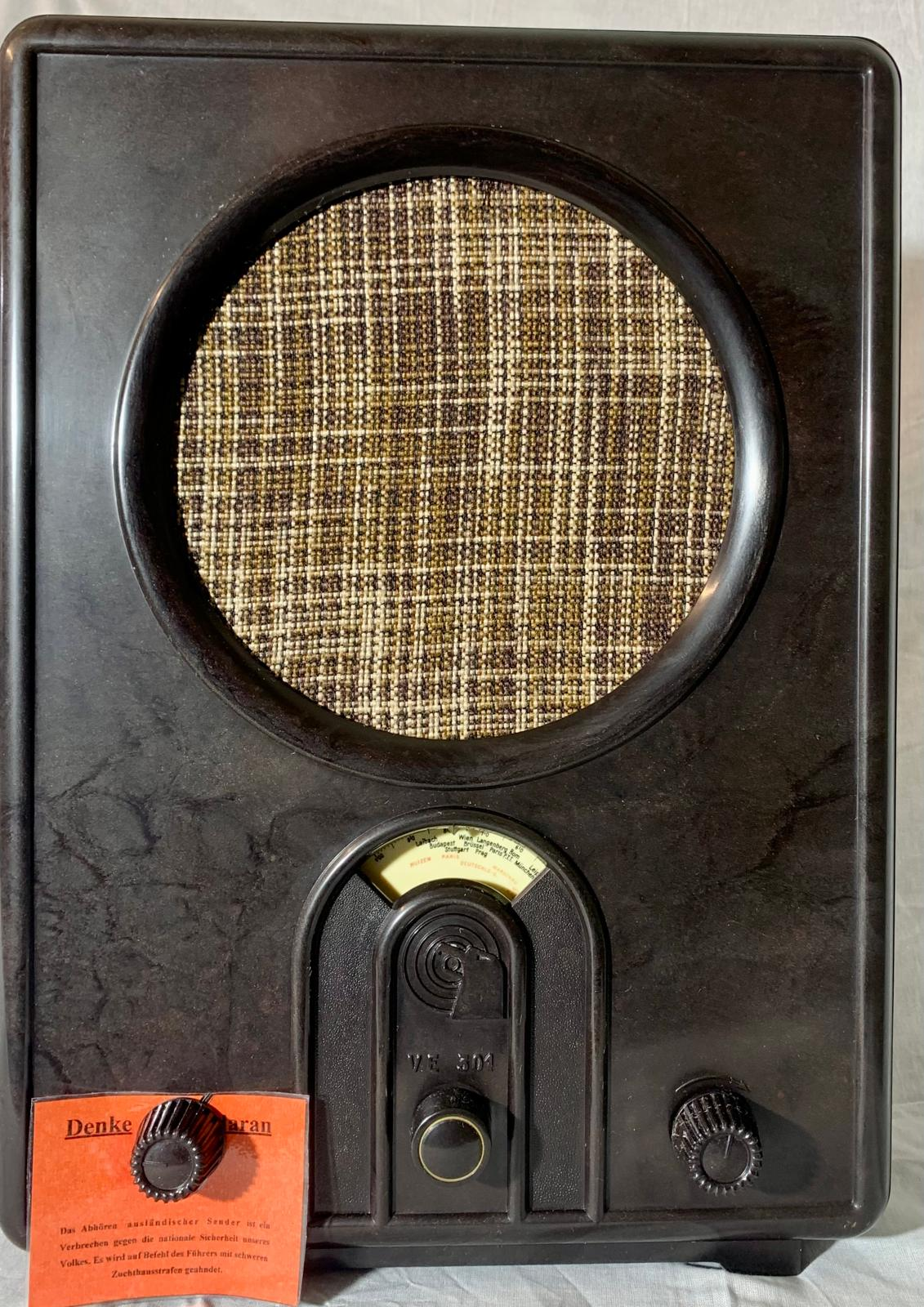
The Volksempfänger VE301W is one of the most historically significant German radio receivers of the 1930s. It was introduced in 1933 as part of the Volksempfänger programme, a standardized low-cost radio concept intended to make radio reception available to a much wider part of the population. The model designation VE301 deliberately refers to 30 January 1933, the date of the National Socialist seizure of power in Germany.
Because of this background, the VE301W is not only a technical object, but also a reminder of how mass media was used for political propaganda. The set was designed to be affordable, simple to operate and suitable for mass production by different German radio manufacturers.
Technical Overview
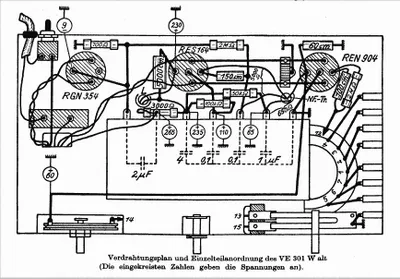
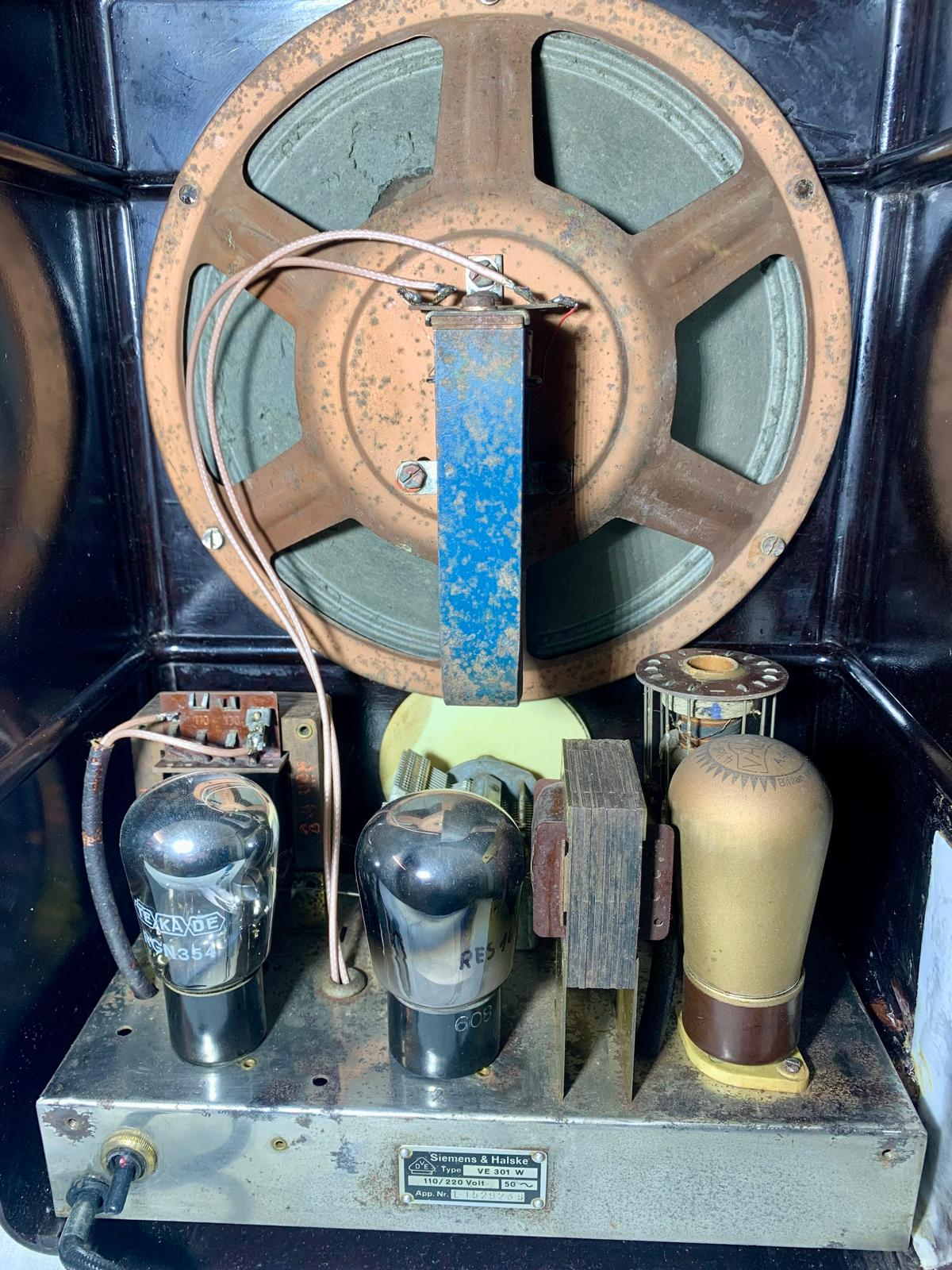
The VE301W is the AC mains version of the Volksempfänger. The “W” stands for Wechselstrom, meaning alternating current. Technically, it is a simple regenerative receiver for long wave and medium wave reception. It uses a small tube line-up consisting of REN904, RES164 and RGN354.
The circuit is intentionally simple: a regenerative detector stage is followed by a single audio output stage. Instead of a modern electrodynamic loudspeaker, the early VE301W uses a large magnetic speaker, which gives the set its characteristic sound.
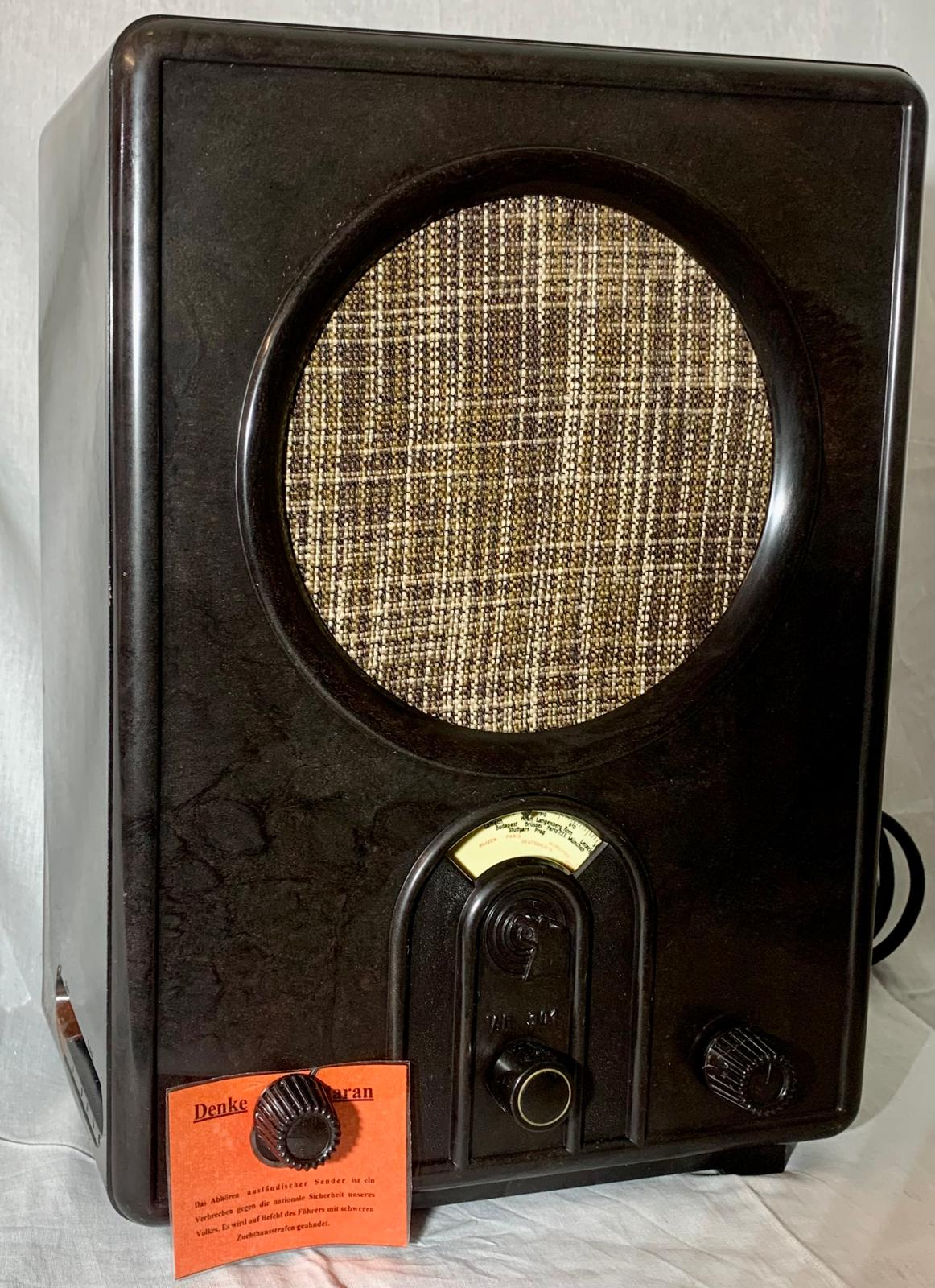
The bakelite cabinet, simple control layout and large front grille make the VE301W immediately recognizable. Although technically modest, it became one of the best-known German radio designs of its era.
Although the VE301W is often described as a rather poor or very limited receiver, this judgement is only partly fair. Its circuit is intentionally simple and it cannot compete with more expensive multi-tube superheterodyne receivers of the same period. However, when connected to a good long-wire antenna and a proper earth connection, the VE301w can still show surprisingly good reception performance. Within the limits of its simple regenerative design, it is capable of receiving stations with much more confidence than its modest reputation might suggest.
Restoration Notes
The aged capacitors were carefully rebuilt. As with my other restorations, the original capacitor bodies were opened, modern components were installed inside, and the parts were resealed so that the chassis retains its historical appearance. This work also included the large capacitor block, which is an important and very visible part of the original construction.
The loudspeaker cloth was renewed, and a new mains cable was installed for safe operation. The rectifier tube was replaced with a working example.
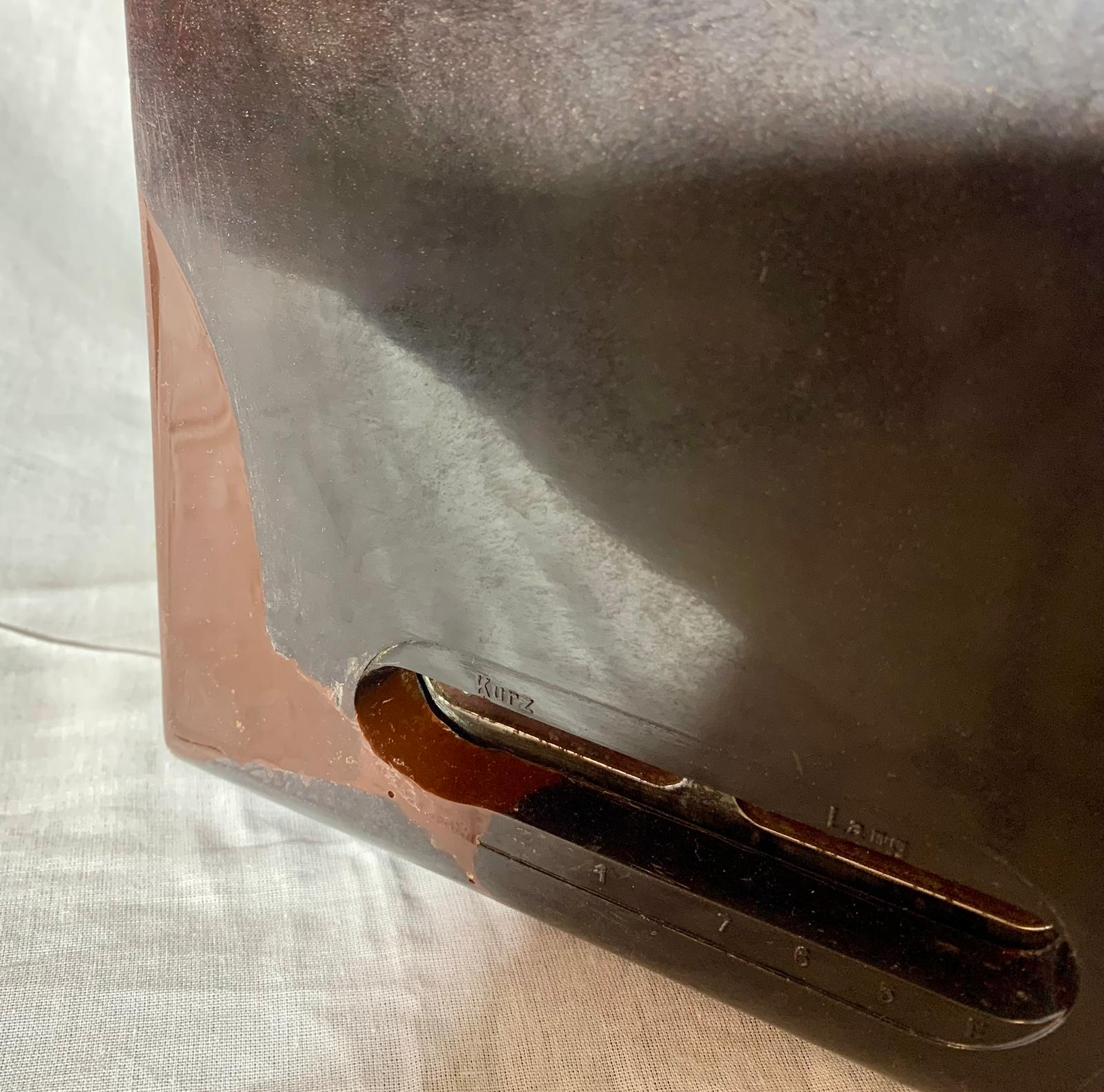
One damaged corner of the Bakelite cabinet was repaired using tinted epoxy resin. The repair was kept as unobtrusive as possible, preserving the original cabinet rather than replacing it.
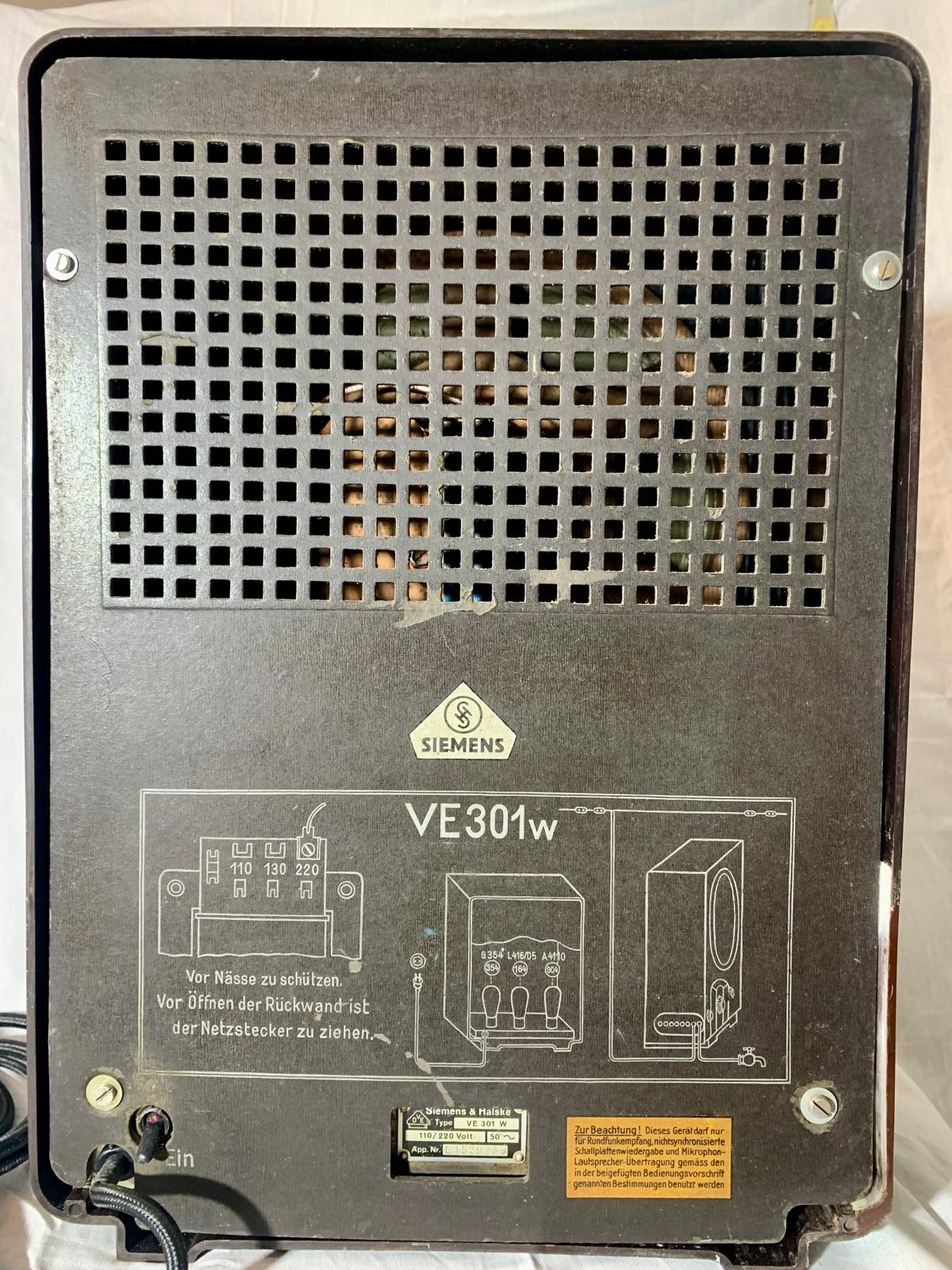
Circuit Diagram and User Manual
Historical Note
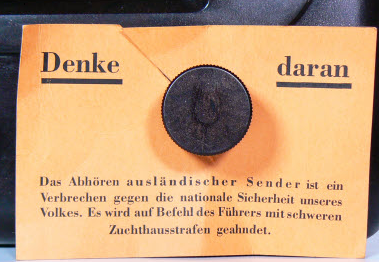
A small but historically telling detail is the warning tag attached to many sets, reminding the listener not to tune in to foreign stations. This is not merely a curiosity: from 1939 onward, listening to foreign broadcasts was punishable under German wartime law. The tag therefore illustrates how closely radio technology, propaganda and control of information were connected in this period.
The VE301W is an important collector’s item today, but it must be viewed in its historical context. It represents both early mass-market radio engineering and the political misuse of broadcasting in the 1930s. For that reason, it is preserved here as a technical and historical document, not as a political symbol.
References and Further Reading
- Radiomuseum.org – Volksempfänger VE301W
- Deutsches Historisches Museum / LeMO – Volksempfänger
- United States Holocaust Memorial Museum – German Radio: The People’s Receiver
- Radiomuseum Grödig – Volksempfänger VE301W
- Norbert Meier – Der deutsche Volksempfänger VE 301 Wn
- Karl-Heinz Monshausen – AEG VE 301 W
- Jogis Röhrenbude – VE-DKE-Pläne
- Deutschlandfunk – Kleiner brauner Propagandakasten
- OE1 Radiokolleg – Der Volksempfänger
Pictures
Movie: Bakelite and VE301
UFA Movie 1930