Radio Monitoring - Autonomous Stations
Radio monitoring is one of the main technical projects at OE6VAG.
What started with a simple ADS-B receiver has gradually developed into a distributed collection of autonomous receiving systems covering aircraft, shortwave data links, weather services, satellites, time signals, radiosondes and propagation monitoring.
Most of the systems operate unattended. Signals are received locally, decoded or processed on small Linux computers, and selected results are transferred to the web server for visualization.
The station combines two different concepts:
- Dedicated receivers, where one receiver or embedded device performs one specific task.
- A shared multi-channel HF platform, where one SDRplay RSPdx simultaneously supplies several independent virtual receivers through KA9Q-Radio.
This page describes the technical receiving infrastructure.
For current reception results, maps, images and decoded data, see:
For general information about LF/HF signals, modes, frequencies and reception experiments that are not necessarily part of the autonomous station, see:
👉 LF and HF Utility Monitoring
HF Multi-Channel Monitoring Station
The central HF receiving system is based on an SDRplay RSPdx, a magnetic-loop antenna and KA9Q-Radio running on a small Intel N100 Linux server.
Instead of assigning a separate SDR to every decoder, the RSPdx continuously digitizes a wide section of the HF spectrum. KA9Q-Radio then creates multiple independently tuned virtual receivers from this common IQ stream.
The basic architecture is:
MagLoop → SDRplay RSPdx → KA9Q-Radio → virtual receivers → individual decoders
This makes it possible to receive several completely different services simultaneously with a single physical SDR and antenna.
The current HF processing range covers the frequencies required for several HFDL groups, DWD weather transmissions, RWM, amateur weak-signal modes and Shannon VOLMET.
Technical Overview
| Technical Overview | |
|---|---|
| Antenna | Magnetic loop antenna |
| Receiver | SDRplay RSPdx |
| Receiver input | Antenna A |
| Processing platform | Intel N100, Linux |
| SDR engine | KA9Q-Radio / radiod |
| RF sample rate | 4 MS/s |
| RF centre frequency | approximately 9.632 MHz |
| Receiver concept | One wideband SDR feeding multiple independent virtual receivers |
| Typical virtual outputs | IQ or demodulated audio streams |
| Operation | Unattended / continuous |
| Current applications | HFDL, DWD RTTY/SYNOP, WEFAX, RWM, FT8, WSPR, Shannon VOLMET |
| Web outputs | Maps, JSON/GeoJSON data, decoded text, weather images, statistics and live audio |
The individual applications do not need direct access to the SDRplay hardware. Each decoder receives only the bandwidth and signal format required for its task.
This separates the RF front end from the individual decoding applications and makes it possible to add or modify services without redesigning the complete receiving chain.
👉 HF Multi-Channel Receiver – Technical Details
HFDL – High Frequency Data Link
HFDL is used by long-range aircraft to exchange data with ground stations over HF.
Unlike local ADS-B reception at 1090 MHz, HFDL can cover very large distances because communication takes place through shortwave propagation.
Several HFDL frequency groups are received simultaneously from the common RSPdx IQ stream.
KA9Q-Radio provides virtual complex-IQ receivers with sufficient bandwidth for groups of nearby HFDL channels. dumphfdl then demodulates and decodes the individual channels.
The current receiver configuration monitors groups including frequencies around:
- 8.885 / 8.942 / 8.948 MHz
- 10.030 / 10.081 MHz
- 11.348 / 11.384 MHz
Decoded HFDL messages are written as structured data. A local processing pipeline extracts aircraft identifiers, positions and additional information and generates GeoJSON for the live map.
Because HFDL position reports occur less frequently than ADS-B messages, the resulting map is not continuous aircraft tracking. Its main attraction is the possibility of receiving aircraft far beyond local VHF/UHF radio range.
Service Overview
| HFDL Service | |
|---|---|
| RF source | Shared RSPdx / KA9Q-Radio platform |
| Virtual receiver bandwidth | 96 kHz per HFDL group |
| Decoder | dumphfdl |
| Processing | JSON message processing and aircraft-position extraction |
| Web format | GeoJSON |
| Operation | Continuous |
| Purpose | Long-range aircraft data-link monitoring |
Live reception:
👉 HFDL on the Live Data page
👉 Open the full HFDL live map
DWD RTTY and SYNOP Weather Reports
The same HF platform is used to receive the German Weather Service HF radioteletype transmissions.
A KA9Q virtual receiver provides the DWD RTTY signal around 10.1008 MHz. The demodulated audio is passed to fldigi, which continuously decodes the 50-baud radioteletype transmission.
The decoded stream contains marine weather bulletins, warnings, forecasts and meteorological observation data.
A second processing stage searches the decoded text for SYNOP and SHIP reports. These coded meteorological observations are parsed and converted into geographic data for display on a map.
This creates an entirely local reception chain:
DWD HF transmitter → MagLoop → RSPdx → KA9Q-Radio → fldigi → text → SYNOP parser → live website
No Internet weather-data feed is required for the displayed observations; the source is the locally received HF transmission.
Service Overview
| DWD RTTY / SYNOP Service | |
|---|---|
| RF source | Shared RSPdx / KA9Q-Radio platform |
| Example frequency | 10.1008 MHz |
| Mode | RTTY / F1B |
| Speed | 50 baud |
| Shift | approximately 450 Hz total |
| Decoder | fldigi |
| Text output | Continuously decoded DWD bulletins |
| Additional processing | SYNOP / SHIP extraction and geolocation |
| Operation | Continuous |
Live reception:
👉 DWD RTTY and SYNOP on the Live Data page
👉 Open DWD RTTY Live
👉 Open the SYNOP / SHIP map
DWD WEFAX – Automated Weather Fax Reception
DWD weather fax is another service generated from the same RSPdx and KA9Q-Radio RF stream.
The primary monitored transmission is DDK3 on 7880 kHz.
Unlike RTTY, WEFAX produces graphical weather charts rather than text. Typical transmissions contain surface-pressure charts, forecasts and other meteorological products.
The receiver provides the required audio channel and scheduled captures are processed using Ilma, a headless WEFAX decoder suitable for unattended operation.
Ilma detects the WEFAX transmission structure, performs phasing and alignment, compensates for timing drift and generates the received chart as an image file.
The complete reception is automated. The resulting image shown on the website is generated from the actual locally received radio signal and may therefore contain noise, fading, missing lines or interference.
Service Overview
| DWD WEFAX Service | |
|---|---|
| RF source | Shared RSPdx / KA9Q-Radio platform |
| Primary station | DWD / Pinneberg DDK3 |
| Primary frequency | 7880 kHz |
| Mode | HF radiofax / F1C |
| Typical format | 120 LPM / IOC 576 |
| Decoder | Ilma |
| Operation | Automated scheduled reception |
| Output | PNG weather chart |
| Web publishing | Latest reception and recent images |
Live reception:
👉 DWD WEFAX on the Live Data page
👉 Open the latest DWD WEFAX reception
RWM – HF Time and Frequency Signal Monitoring
RWM is a Russian standard-frequency and time-signal station transmitting on several HF frequencies.
The OE6VAG autonomous receiver currently monitors 9.996 MHz.
A KA9Q virtual receiver supplies the signal to a local analysis pipeline. Rather than simply detecting the carrier, the software examines the timing structure of the transmission.
Depending on the currently transmitted RWM segment, the receiver can identify:
- second timing
- minute timing
- the coded 1 Hz A1X signal
- the 10 Hz A1N timing signal
- carrier-only periods
- DUT1 and dUT1 information
The decoded Earth-rotation correction can be used to derive UT1 − UTC when the appropriate coded RWM transmission is present.
The carrier-frequency display is intended as a receiver observation and not as a calibrated frequency measurement.
Service Overview
| RWM Service | |
|---|---|
| RF source | Shared RSPdx / KA9Q-Radio platform |
| Frequency | 9.996 MHz |
| Signal type | Standard-frequency and time transmission |
| Analysis | Local timing and pulse-pattern decoder |
| Decoded information | Transmission mode, second/minute lock, DUT1, dUT1, UT1−UTC |
| Processing | Periodic IQ analysis |
| Operation | Automated |
Live reception:
👉 RWM on the Live Data page
👉 Open the full RWM live monitor
Shannon VOLMET – Live HF Audio
Not every autonomous HF service needs a digital decoder.
Shannon VOLMET on 8957 kHz USB is received continuously as an audio service.
KA9Q-Radio creates a dedicated USB receiver with a speech-band audio passband. The resulting audio is encoded as Opus and streamed to the web server.
The public stream therefore contains the signal received by the local RSPdx and magnetic-loop antenna rather than an Internet relay.
Reception quality changes naturally with HF propagation, fading and interference.
Service Overview
| Shannon VOLMET Service | |
|---|---|
| RF source | Shared RSPdx / KA9Q-Radio platform |
| Station | Shannon VOLMET |
| Frequency | 8957 kHz |
| Mode | USB voice |
| Audio passband | approximately 300–3000 Hz |
| Output | Live audio |
| Streaming format | Opus |
| Operation | Continuous |
Live reception:
👉 VOLMET on the Live Data page
👉 Open the Shannon VOLMET live receiver
FT8 – 30 Metre Propagation Monitoring
Another virtual receiver monitors the amateur-radio FT8 activity around 10.136 MHz on the 30 m band.
The system is receive-only.
The virtual receiver supplies narrowband IQ data to the WSJT-X jt9 decoder. Approximately every 15 seconds, a new FT8 transmission interval is processed.
Decoded messages are collected locally and enriched with callsign and DXCC information for the web display.
Selected reception reports are also forwarded to PSK Reporter.
The purpose of this receiver is not automated amateur-radio operation. It uses the large number of already active FT8 transmitters as propagation probes.
Service Overview
| FT8 Service | |
|---|---|
| RF source | Shared RSPdx / KA9Q-Radio platform |
| Band | 30 m |
| Dial frequency | 10.136 MHz USB |
| Virtual channel | Narrowband IQ |
| Decoder | WSJT-X jt9 |
| Decode interval | approximately 15 seconds |
| External reporting | PSK Reporter |
| Operation | Continuous receive-only |
Live reception:
👉 FT8 on the Live Data page
👉 Open FT8 30 m Live
WSPR – 30 Metre Propagation Monitoring
WSPR complements the FT8 receiver with a mode specifically designed for weak-signal propagation observation.
The receiver monitors the 30 m WSPR allocation using a 10.138700 MHz USB dial frequency.
KA9Q-Radio again provides the virtual receiver, while wsprd performs the decoding.
Because WSPR transmissions contain callsign, locator and transmitter-power information, the received spots can be used to examine propagation over longer periods.
The local web processing therefore provides more than a list of recent decodes. It can calculate and display information such as:
- received spots during the last 24 hours
- unique callsigns and locator squares
- received countries / DXCC entities
- reception distance
- signal-to-noise ratio
- day/night propagation conditions
- long-distance reception records
Service Overview
| WSPR Service | |
|---|---|
| RF source | Shared RSPdx / KA9Q-Radio platform |
| Band | 30 m |
| Dial frequency | 10.138700 MHz USB |
| Decoder | wsprd |
| Purpose | Weak-signal propagation monitoring |
| Processing | Local statistics and geographic analysis |
| Operation | Continuous receive-only |
Live reception:
👉 WSPR on the Live Data page
👉 Open the WSPR 30 m propagation monitor
ADS-B Aircraft Ground Station
Local aircraft are received directly on 1090 MHz using a dedicated RTL-SDR receiver.
The antenna is a homemade outdoor cantenna. Despite the simple construction, this antenna has provided reliable ADS-B reception for several years.
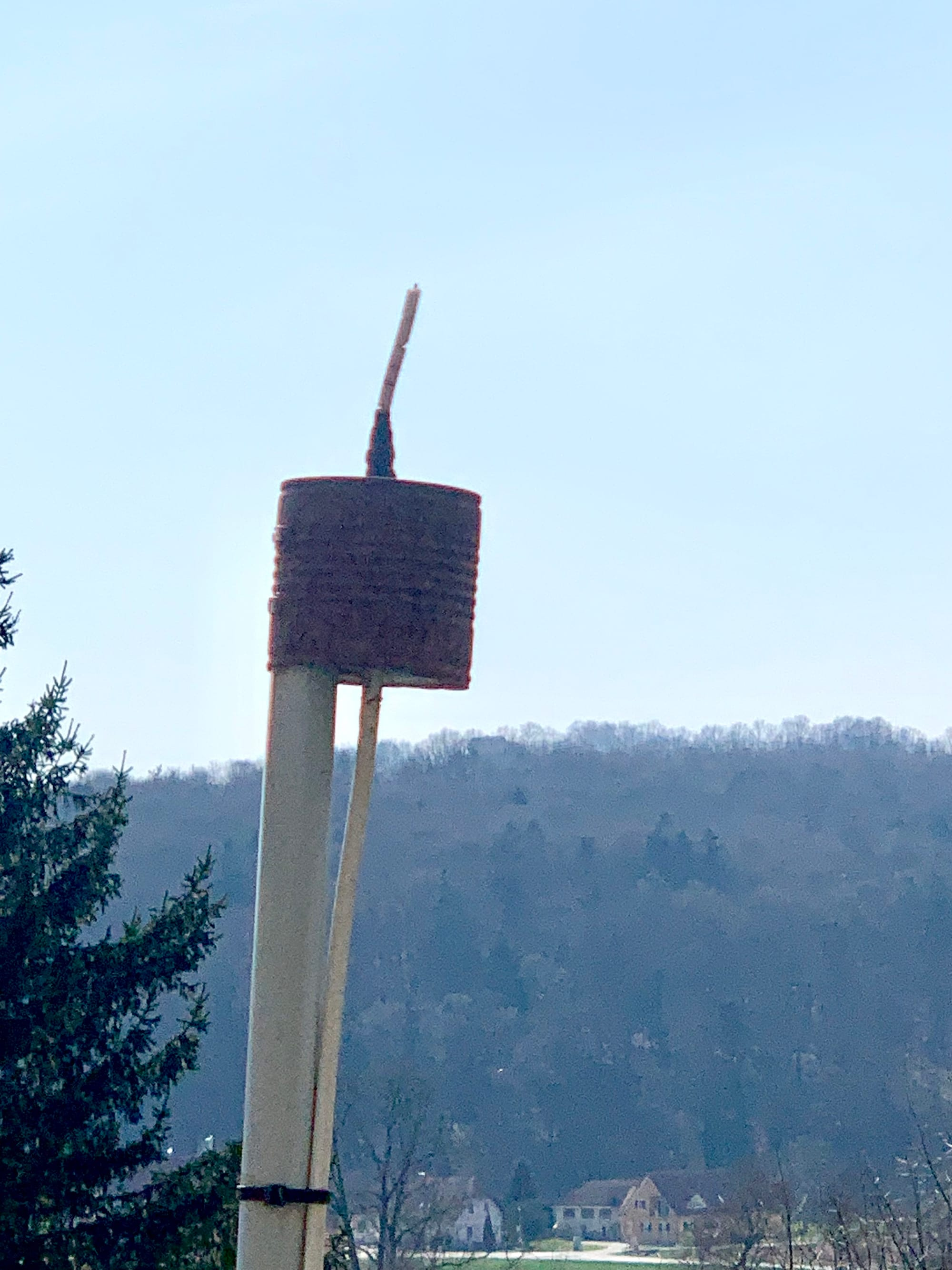
The receiver is connected to the Raspberry Pi radio server. readsb decodes Mode-S and ADS-B messages, while tar1090 provides the interactive aircraft map.
The receiver also contributes locally received traffic to ADS-B Exchange.
The map hosted by OE6VAG represents aircraft actually received by the local ground station.
Technical Overview
| Technical Overview | |
|---|---|
| Frequency | 1090 MHz |
| Receiver | Nooelec NESDR SMArTee v2 / RTL-SDR |
| LNA | External amplifier |
| Antenna | DIY outdoor cantenna |
| Feedline | Double-shielded coaxial cable |
| Platform | Raspberry Pi radio server |
| Decoder | readsb |
| Web interface | tar1090 |
| External feed | ADS-B Exchange |
| Operation | Continuous |
Live reception:
👉 ADS-B on the Live Data page
👉 Open the local ADS-B live map
METEOR-M2-4 Weather Satellite Station
The METEOR receiving system automatically receives digital LRPT weather images from METEOR-M2-4 around 137.9 MHz.
A dedicated QFH antenna provides near-omnidirectional coverage suitable for low-Earth-orbit weather satellites.
The receiving computer automatically obtains orbital information and determines upcoming satellite passes.
For suitable passes, the reception process is started automatically shortly before acquisition of signal.
SatDump records and decodes the LRPT signal and produces the resulting weather imagery. Processing includes the generation of useful channel combinations and corrected image products.
After a successful pass, the selected image and reception metadata are automatically transferred to the web server.
The complete process therefore runs without manual intervention:
orbit prediction → pass scheduling → SDR recording → LRPT decoding → image processing → web publishing
Technical Overview
| Technical Overview | |
|---|---|
| Satellite | METEOR-M2-4 |
| Frequency | approximately 137.9 MHz |
| Signal | LRPT |
| Receiver | RTL-SDR |
| Antenna | QFH |
| Platform | Raspberry Pi radio server |
| Decoder | SatDump |
| Operation | Automatic during suitable satellite passes |
| Output | Weather satellite images and pass metadata |
| Publishing | Automatic transfer to the web server |
Live reception:
👉 Latest METEOR reception on the Live Data page
Inmarsat-C / SafetyNET / EGC Monitoring
L-band satellite reception is provided by a dedicated SDR and an active L-band patch antenna.
The receiver continuously monitors an Inmarsat STD-C channel around 1.537 GHz.
SatDump performs the satellite demodulation and decoding and extracts Enhanced Group Call (EGC) messages.
Depending on the received traffic, these can include maritime safety information, navigational warnings, meteorological information and other broadcast messages distributed through the Inmarsat network.
A local processing stage selects recent messages and publishes them in a readable form.
The RF signal and message decoding are performed locally at the OE6VAG receiving station.
Technical Overview
| Technical Overview | |
|---|---|
| Service | Inmarsat STD-C |
| Band | L-band |
| Frequency | approximately 1.537 GHz |
| Receiver | Nooelec SMArTee XTR |
| Antenna | Active L-band patch |
| Platform | Raspberry Pi radio server |
| Decoder | SatDump |
| Data | EGC / SafetyNET-related messages |
| Operation | Continuous |
| Publishing | Automatic selection and web transfer |
The displayed data is experimental reception and must not be used for navigation or safety-critical purposes.
Live reception:
👉 Inmarsat-C on the Live Data page
👉 Open all received Inmarsat-C messages
DCF77 Time Signal Station
DCF77 is the German longwave time-signal transmitter in Mainflingen operating on 77.5 kHz.
Unlike the SDR-based systems, DCF77 uses a dedicated receiver module with a ferrite antenna connected directly to a Raspberry Pi Zero 2 W.
The module converts the amplitude modulation into digital pulses.
The decoder measures the pulse duration:
- approximately 100 ms → binary 0
- approximately 200 ms → binary 1
- missing pulse → minute marker
The software reconstructs the 59-bit minute telegram and decodes time, date, daylight-saving information and parity.
The same receiver software also includes support for the additional Meteotime data carried in the DCF77 transmission.
The decoder continuously writes its current status to a lightweight JSON structure. The data is periodically transferred to the public web server, where JavaScript renders the live receiver state.
Technical Overview
| Technical Overview | |
|---|---|
| Frequency | 77.5 kHz |
| Antenna | Ferrite antenna |
| Receiver | Dedicated DCF77 receiver module |
| Interface | Digital GPIO |
| Platform | Raspberry Pi Zero 2 W |
| Decoder | Custom Python decoder |
| Time decoding | 59-bit DCF77 minute telegram |
| Additional decoder | Meteotime frame processing |
| Data interface | JSON |
| Operation | Continuous |
| Web update | Near real-time |
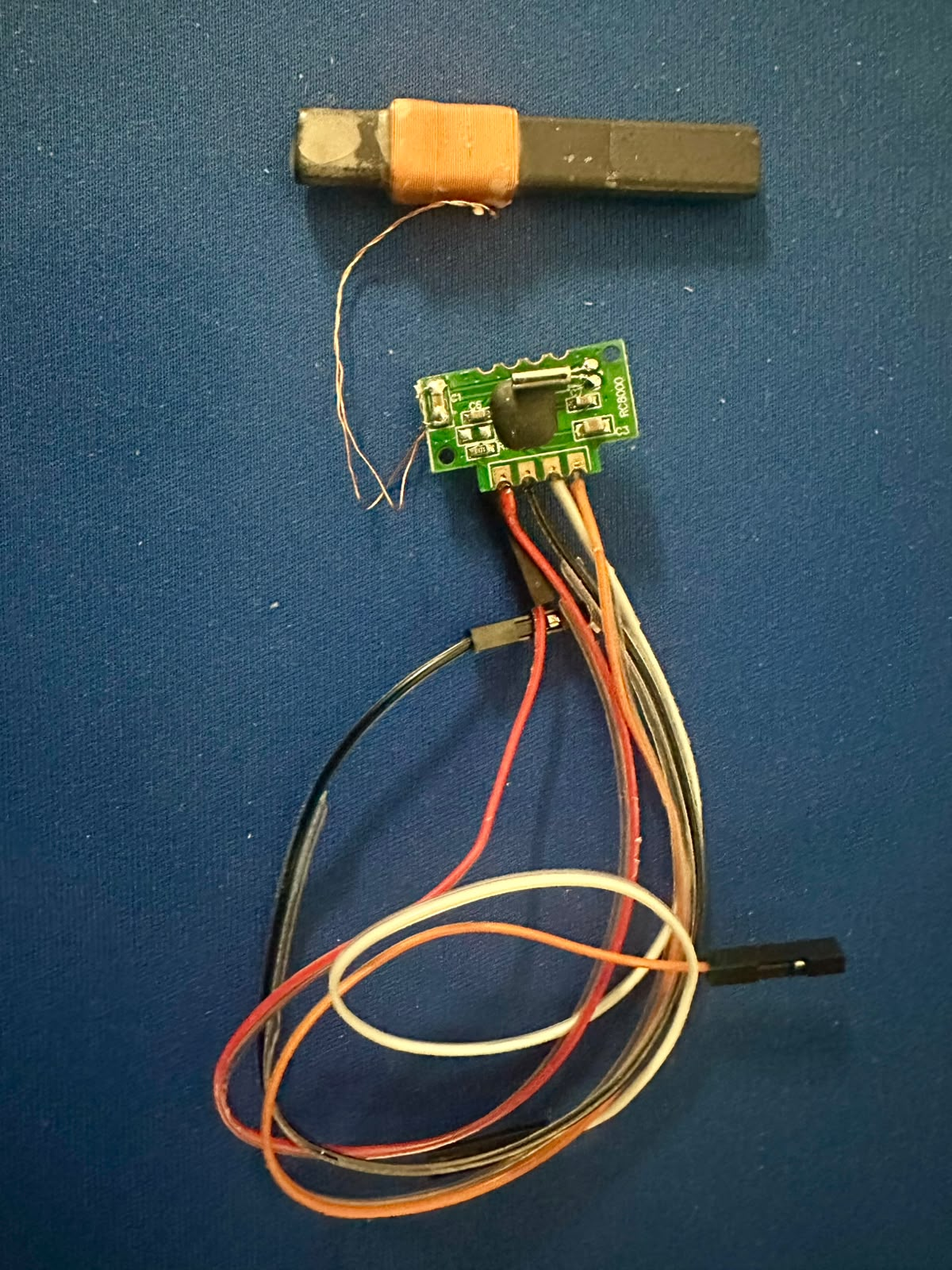
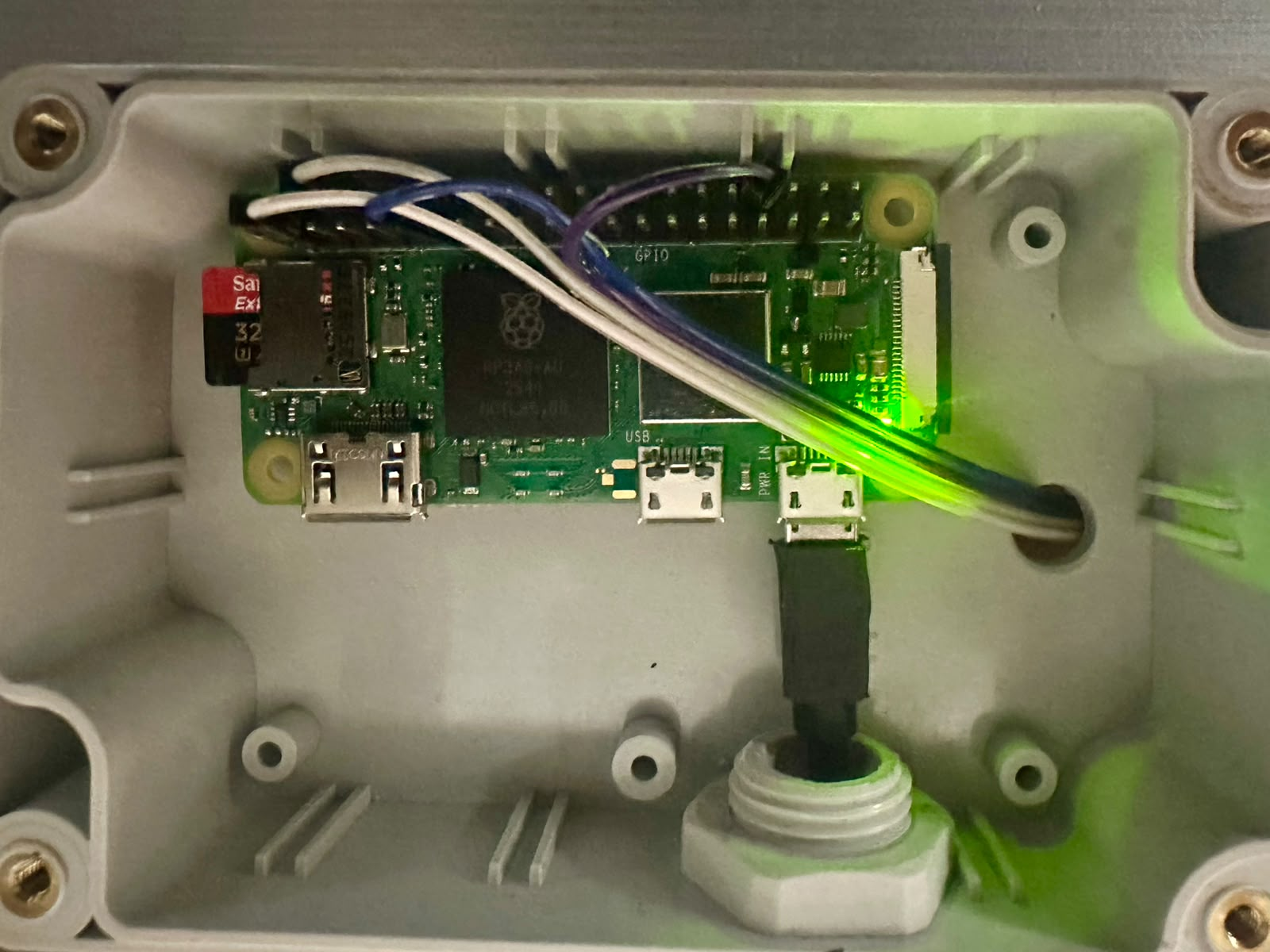
DCF77 has two separate technical detail pages because the project contains two distinct topics: the implementation of the complete live receiving chain and the Meteotime decoding process itself.
Live reception:
👉 DCF77 on the Live Data page
Technical details:
👉 DCF77 Live – Technical Implementation
👉 DCF77 Meteotime Decoding – Technical Details
Radiosonde Reception
Weather radiosondes launched by meteorological services transmit position and atmospheric measurements while ascending through the atmosphere.
Local reception uses an rdzTTGOsonde receiver connected to a simple quarter-wave antenna.
The receiver operates autonomously and communicates with the local network over Wi-Fi.
Decoded radiosonde telemetry is forwarded to public radiosonde services such as SondeHub. At the same time, packets are also sent to the OE6VAG infrastructure.
A local logger stores received flights and track points, and a small API supplies the map shown on this website.
Only radiosondes actually received by the OE6VAG ground station are included in the local receiver map.
Technical Overview
| Technical Overview | |
|---|---|
| Receiver | rdzTTGOsonde |
| Band | UHF radiosonde band |
| Antenna | Quarter-wave antenna |
| Network | Wi-Fi |
| Local transport | MQTT |
| Storage | Local flight / track-point database |
| Web interface | Local API and map |
| External services | SondeHub and other radiosonde networks |
| Operation | Autonomous when sondes are in range |
Live reception:
👉 Radiosondes on the Live Data page
👉 Open the OE6VAG radiosonde map
TinyGS Satellite Receiver
A small LILYGO/TTGO-based TinyGS station operates from the attic.
The station receives compatible satellite and LoRa-based transmissions in the 868 MHz region and forwards successfully decoded packets to the TinyGS network.
Unlike the HF, ADS-B or DCF77 receivers, most of the decoding and network infrastructure is provided by the TinyGS ecosystem.
This makes the station a good example of a largely self-contained network-connected receiver.
Technical Overview
| Technical Overview | |
|---|---|
| Platform | LILYGO / TTGO |
| Band | 868 MHz |
| Network | Wi-Fi |
| Software ecosystem | TinyGS |
| Installation | Attic |
| Data handling | Packet forwarding to TinyGS |
| Operation | Continuous |
Live reception:
👉 TinyGS on the Live Data page
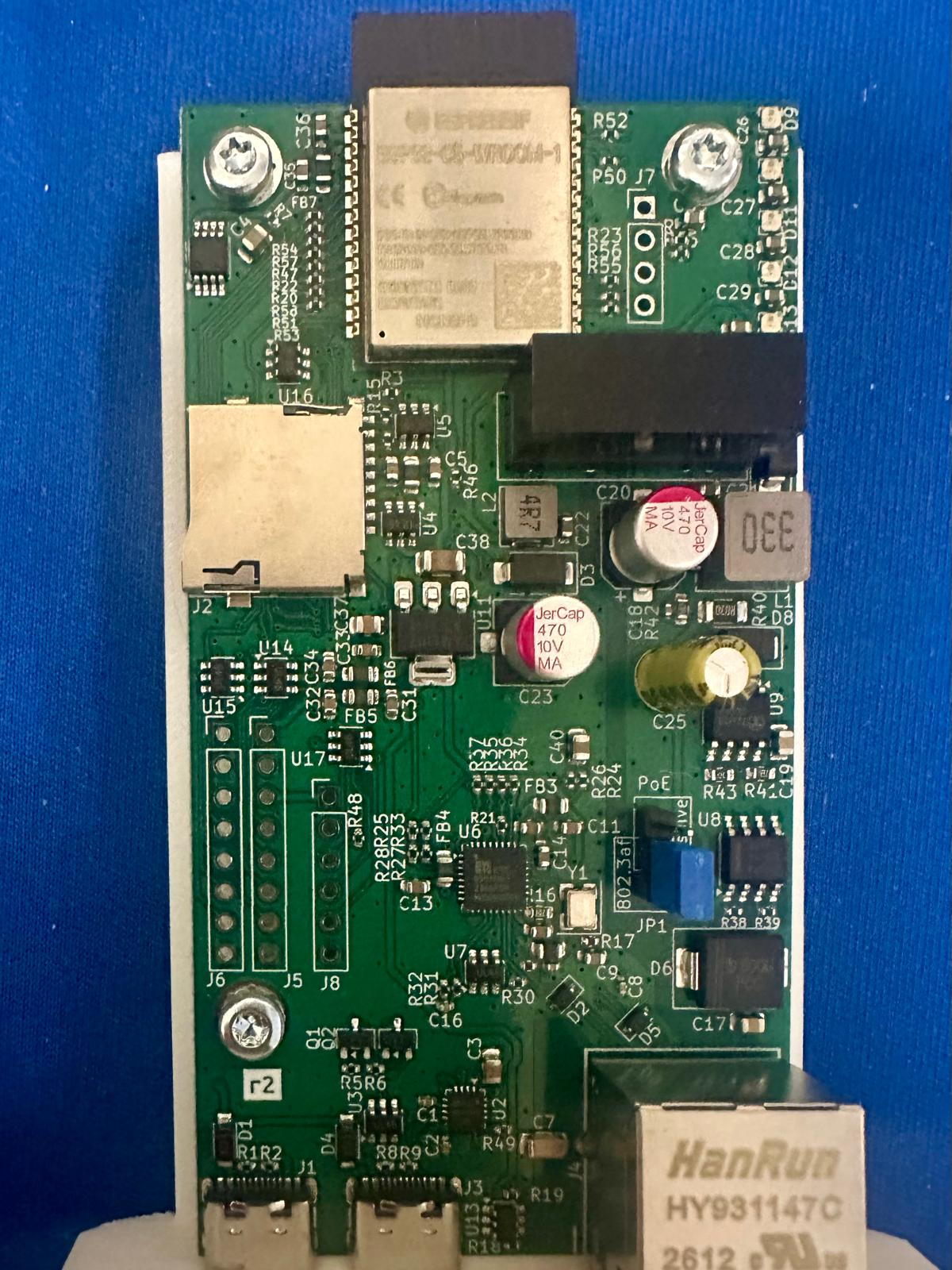
Mobile C-ITS / ITS-G5 Monitoring
C-ITS differs from the other systems on this page because the receiver is not a fixed 24/7 ground station.
It is a mobile reception and measurement system operated while driving.
The receiver captures cooperative road-traffic messages transmitted by compatible vehicles and roadside infrastructure.
The C-ITS packet stream is forwarded via OpenTrafficMap MQTT.
At the same time, the receiver position is supplied independently by an iPhone running OwnTracks.
The OE6VAG processing system combines both streams:
C-ITS receiver → OpenTrafficMap MQTT → processing server
and
iPhone GPS → OwnTracks → MQTT → processing server
The software stores received messages, normalizes relevant information, associates packets with the current receiver position and calculates transmitter-to-receiver distance where possible.
Each actual drive is converted into an interactive map and statistical summary.
Only periods containing a real recorded trip are published in the archive.
Technical Overview
| Technical Overview | |
|---|---|
| System type | Mobile C-ITS / ITS-G5 receiver |
| Operation | During actual vehicle journeys |
| C-ITS transport | OpenTrafficMap MQTT |
| Receiver position | iPhone / OwnTracks |
| Processing | Message normalization, GPS correlation and distance calculation |
| Storage | Raw and processed trip data |
| Output | Interactive drive map and trip statistics |
Live / recorded data:
👉 C-ITS on the Live Data page
👉 Open the C-ITS drive archive
APRS Integration
APRS is also integrated into the OE6VAG website, although the current configuration differs from the locally decoded receiving systems described above.
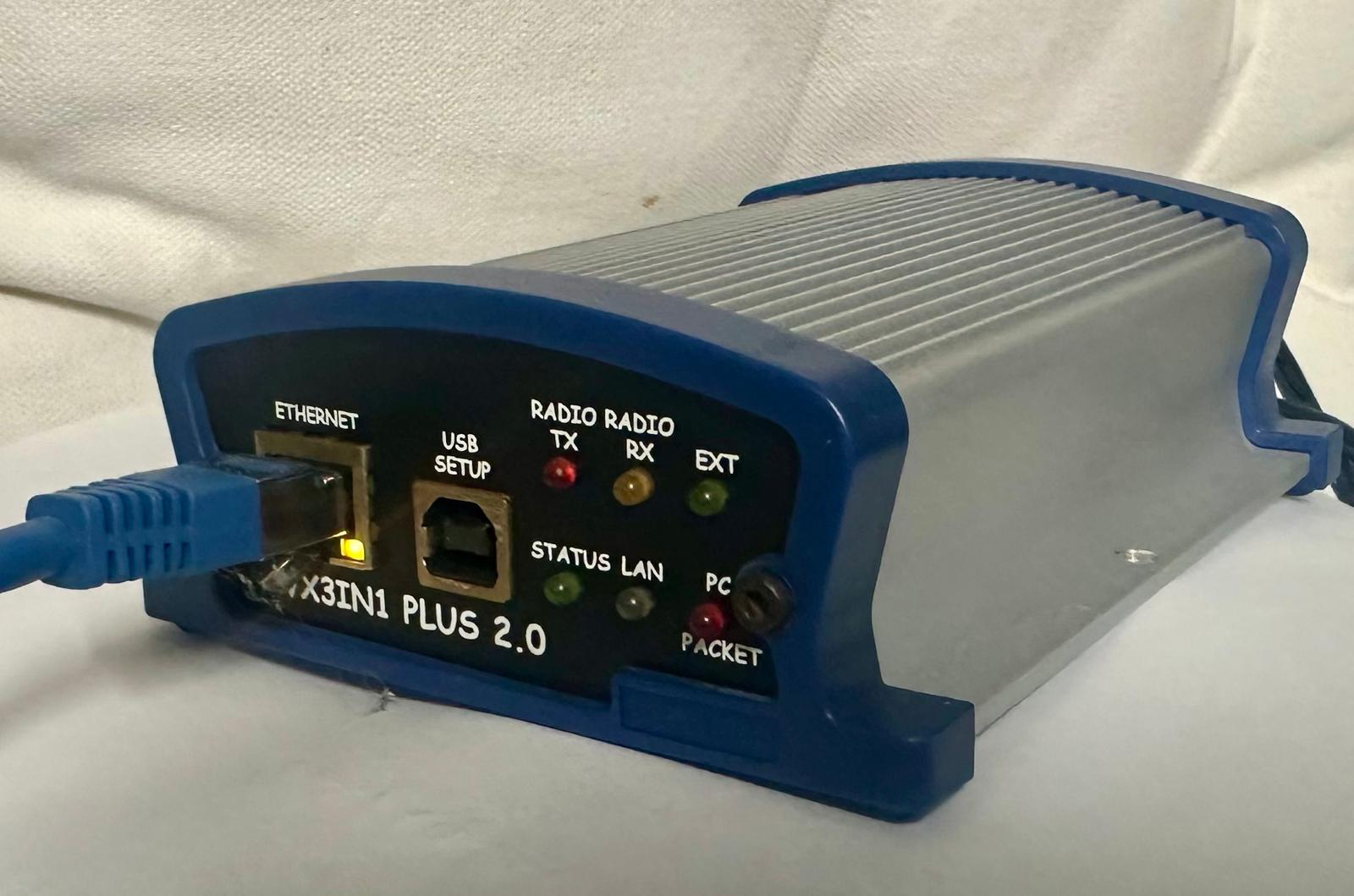
A WX3IN1 Plus 2.0 provides APRS functionality and can support RF operation, but the normal station configuration currently uses the network connection and APRS-IS.
The web display obtains APRS information through APRS.fi, with the OE6VAG web infrastructure providing the required integration for the browser.
APRS should therefore not be interpreted as another SDR-based local receive chain in the same sense as ADS-B, HFDL or radiosonde reception.
Technical Overview
| Technical Overview | |
|---|---|
| Controller | WX3IN1 Plus 2.0 |
| Primary transport | APRS-IS |
| Network | Ethernet / Internet |
| Beacon content | Position and station information |
| RF capability | Available but not required for normal operation |
| Web integration | APRS.fi data through local web integration |
Live data:
👉 APRS on the Live Data page
Experimental and Inactive Receivers
Not every successful receiving experiment becomes a permanent autonomous service.
One example is VHF ACARS / RAVEN reception. The necessary receiver software has been tested successfully and remains available, but the service is currently intentionally inactive.
Other manually received signals, decoder experiments and utility-radio examples are documented separately rather than being presented here as permanent receiving stations.
👉 LF and HF Utility Monitoring
How the Receiving Network Fits Together
The complete monitoring station is deliberately distributed across several systems.
The central HF platform handles all services that can share the RSPdx and magnetic-loop antenna:
MagLoop → RSPdx → KA9Q-Radio → multiple HF services
A second small computer handles several dedicated SDR-based services such as:
ADS-B · METEOR-M2-4 · Inmarsat STD-C
DCF77 uses its own low-power Raspberry Pi Zero receiver.
Radiosonde and TinyGS reception are performed by independent network-connected embedded devices.
C-ITS is a mobile system and only produces data while the receiver is travelling.
The resulting data types are very different:
- aircraft positions
- decoded text
- meteorological observations
- weather-fax images
- satellite imagery
- time-signal status
- propagation statistics
- satellite packets
- radiosonde tracks
- live audio
Nevertheless, the publication concept is similar for most services:
antenna → receiver → decoder → local processing → network transfer → web server → live visualization
The public OE6VAG website is therefore the final presentation layer rather than the receiver itself.
This separation keeps the individual receiving systems independent. A decoder or receiver can be restarted, modified or replaced without requiring the complete website architecture to change.
It also allows one physical HF receiver to support several independent applications while dedicated receivers remain available where they make more technical sense.
About This Project
These receiving systems are part of a private, non-commercial technical hobby project.
The objective is not merely to display information already available on the Internet. Where possible, the data shown on the website originates from radio signals received locally and processed by the OE6VAG station.
A significant part of the project is therefore the complete technical chain between the antenna and the browser:
RF reception → signal processing → decoding → automation → data processing → web integration
The station continues to evolve as new signals, software and receiving techniques are tested.
Current decoded data, images, maps and receiver status can be found here: