LF and HF Radio Monitoring & Signal Decoding
See also: VHF/UHF radio monitoring →
This page documents radio signals, reception experiments and decoding techniques from longwave through the HF spectrum.
The focus is on the signals themselves: what can be heard or seen, how the transmission works, which software can be used, and what actual reception looks like.
Some examples were received manually with an Icom IC-7300 and a 40 m Windom antenna, while others were observed with SDR receivers and decoding software. Selected services are now also received continuously by the autonomous OE6VAG monitoring infrastructure.
The distinction is important:
- This page describes signals, modes and reception examples.
- Radio Monitoring – Autonomous Receiving Stations describes the permanent autonomous receiving stations.
- HF Multi-Channel Receiver – SDRplay RSPdx and KA9Q-Radio describes the shared RSPdx / KA9Q-Radio HF receiver in technical detail.
- Live Data shows the current live results.
The examples below are ordered approximately from the lowest frequencies upwards.
For signals above HF, see:
👉 VHF and UHF Radio Monitoring & Signal Decoding
DCF77 – Time Signal and Meteotime Data
DCF77 is the German longwave time-signal transmitter in Mainflingen and operates continuously on 77.5 kHz.
The signal contains precise time and date information using amplitude-modulated second pulses. A pulse of approximately 100 ms represents a binary zero, while approximately 200 ms represents a binary one. The missing pulse at the end of each minute marks the minute boundary.
DCF77 has also been used to carry additional Meteotime weather forecast data.
Signal Characteristics
| Parameter | Value |
|---|---|
| Frequency | 77.5 kHz |
| Service | Time and frequency standard |
| Modulation | Amplitude-modulated second pulses |
| Basic data | Time, date, DST information and parity |
| Additional data | Meteotime weather information |
| Reception | Longwave / LF |
DCF77 can be monitored with a suitable LF receiver or SDR, but dedicated ferrite-antenna receiver modules are particularly convenient for continuous digital decoding.
OE6VAG Autonomous Reception
DCF77 is continuously received by a dedicated Raspberry Pi Zero 2 W system with a ferrite antenna and a custom decoder.
The live station provides second-pulse measurements, decoded time information and decoder statistics.
The project also includes separate technical documentation for the receiver implementation and for Meteotime decoding.
👉 Autonomous Radio Monitoring Stations
👉 DCF77 Live – Technical Implementation
👉 DCF77 Meteotime Decoding – Technical Details
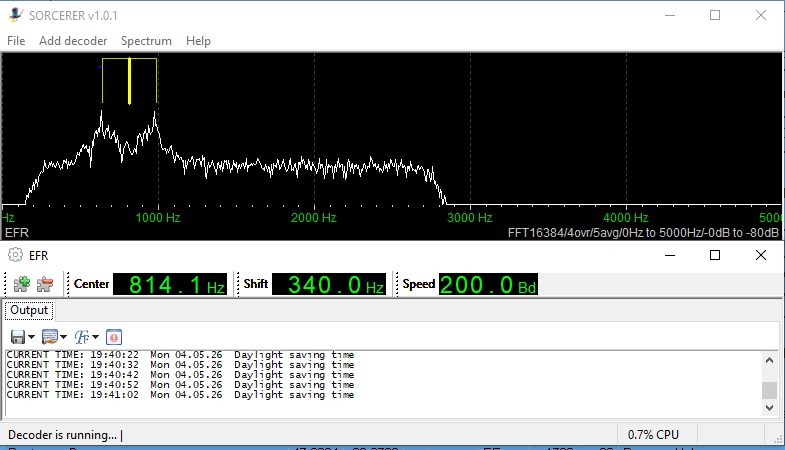
EFR Longwave Telecontrol
EFR is a longwave radio-control system used for applications such as energy management, tariff switching, load control, heat pumps and storage heaters.
The transmissions are a good example of a non-voice LF utility service that can be observed with a general-coverage receiver or SDR.
Signal Characteristics
| Parameter | Value |
|---|---|
| Typical frequencies | 129.1, 135.6 and 139 kHz |
| Mode | FSK |
| Approx. bandwidth | about 1 kHz |
| Content | Telecontrol and time-synchronised control data |
| Reception | LF / longwave |
The signals are continuously present and are therefore useful for experimenting with LF reception, antennas and signal-analysis software.
Receiving and Decoding
SDR software is useful for observing the FSK structure and checking signal strength.
Depending on the required level of analysis, programs such as MultiPSK, Sorcerer or dedicated signal-analysis software can be used.
OE6VAG Reception Example
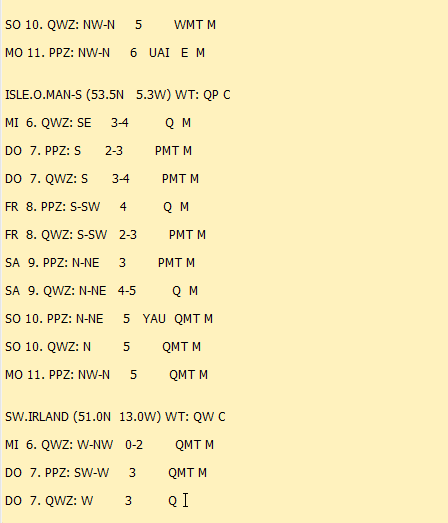
DWD LF RTTY – DDH47 on 147.3 kHz
The German Weather Service also transmits marine weather information by radioteletype on longwave.
DDH47 is interesting because it combines LF propagation with a classic narrowband teleprinter signal.
Signal Characteristics
| Parameter | Value |
|---|---|
| Frequency | 147.3 kHz |
| Station | DDH47 |
| Mode | F1B RTTY |
| Speed | 50 baud |
| Shift | ±42.5 Hz |
| Content | Marine weather reports and warnings |
The narrow frequency shift makes receiver stability and accurate tuning more important than with the wider HF RTTY channels.
Receiving and Decoding
Suitable programs include fldigi, MultiPSK and other RTTY-capable decoders.
The audio level should be adjusted carefully and the receiver should remain frequency-stable during reception.
OE6VAG Reception Example
Aeronautical NDB Morse Beacons
Non-directional beacons are simple aeronautical radio beacons transmitting a continuous carrier together with a repeated Morse identifier.
Many NDBs have disappeared from operational aviation use, but remaining transmitters are still interesting targets for LF/MF monitoring and propagation observations.
Signal Characteristics
| Parameter | Value |
|---|---|
| Typical range | approximately 190–535 kHz |
| Identification | Repeated Morse identifier |
| Audio modulation | commonly 400 Hz or 1020 Hz |
| Bandwidth | narrow |
| Service | Aeronautical navigation |
At night, NDBs can sometimes be received over surprisingly long distances.
Receiving and Decoding
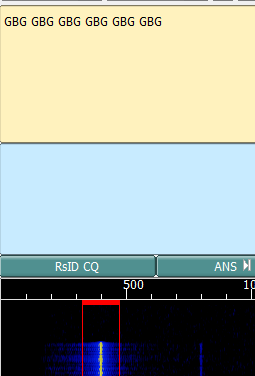
The identifier can simply be copied by ear.
For visual monitoring or automatic CW decoding, SDR software, fldigi, CwGet and similar tools can be used.
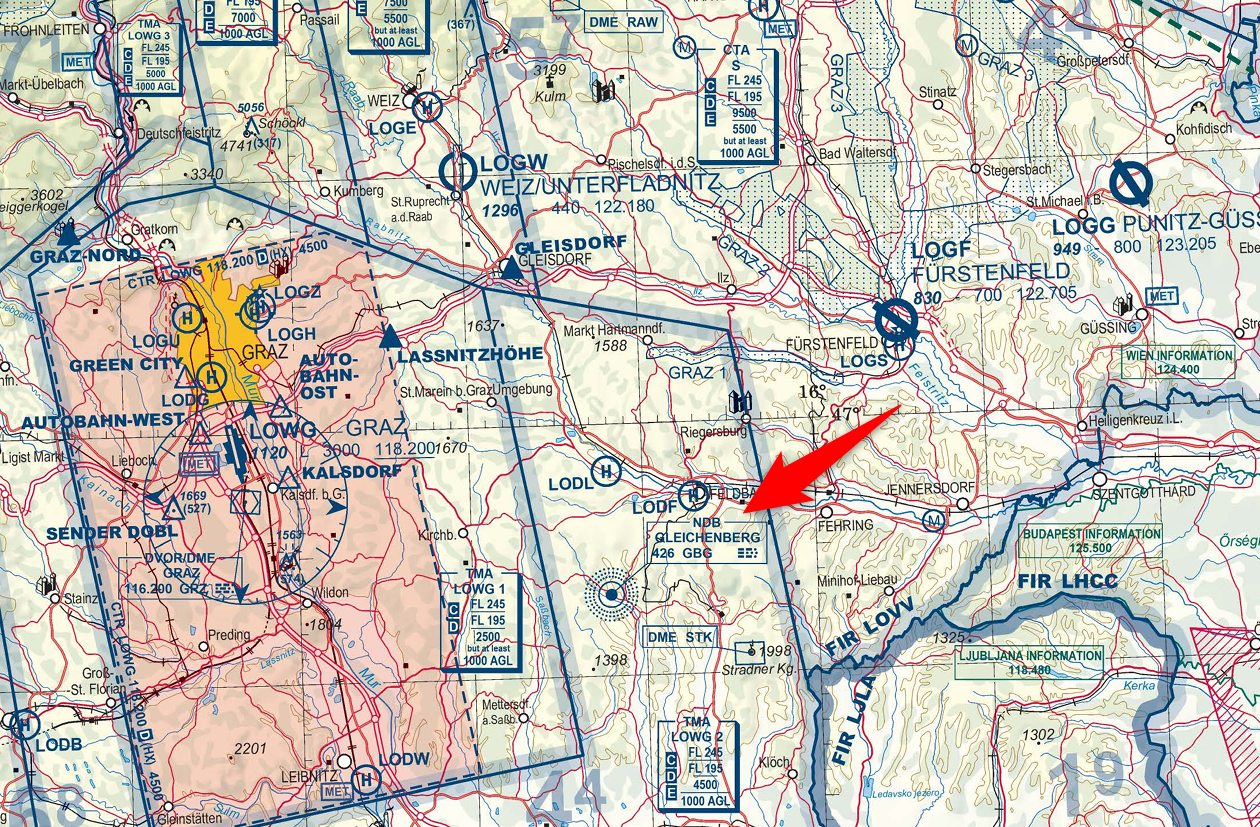
Digital aviation charts are useful for identifying the beacon after its Morse code has been received.
OE6VAG Reception Example
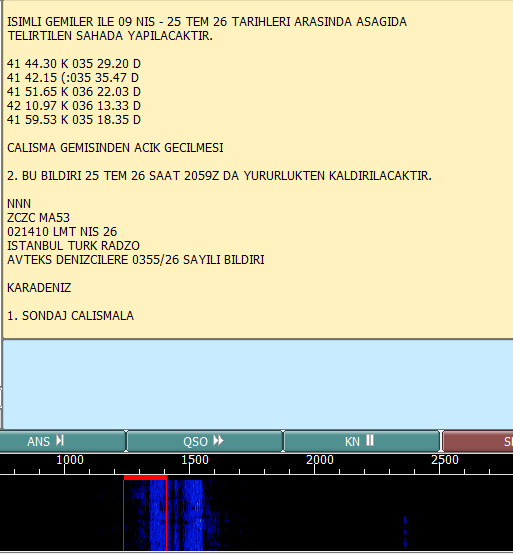
NAVTEX Maritime Safety Messages
NAVTEX is one of the most useful utility signals for practical decoding.
It distributes maritime safety information including navigational warnings, meteorological warnings and weather forecasts.
Signal Characteristics
| Parameter | Value |
|---|---|
| International NAVTEX | 518 kHz |
| National / local-language NAVTEX | 490 kHz |
| HF MSI / NAVTEX | 4209.5 kHz |
| Mode | SITOR-B / FEC |
| Modulation | FSK |
| Speed | 100 baud |
| Shift | 170 Hz |
| Typical bandwidth | approximately 300 Hz |
Messages contain station and message-type identifiers, allowing the receiving software to sort and filter incoming broadcasts.
Receiving and Decoding
fldigi supports NAVTEX/SITOR-B reception. Other specialised programs such as YaND and MultiPSK can also be used.
OE6VAG Reception Example
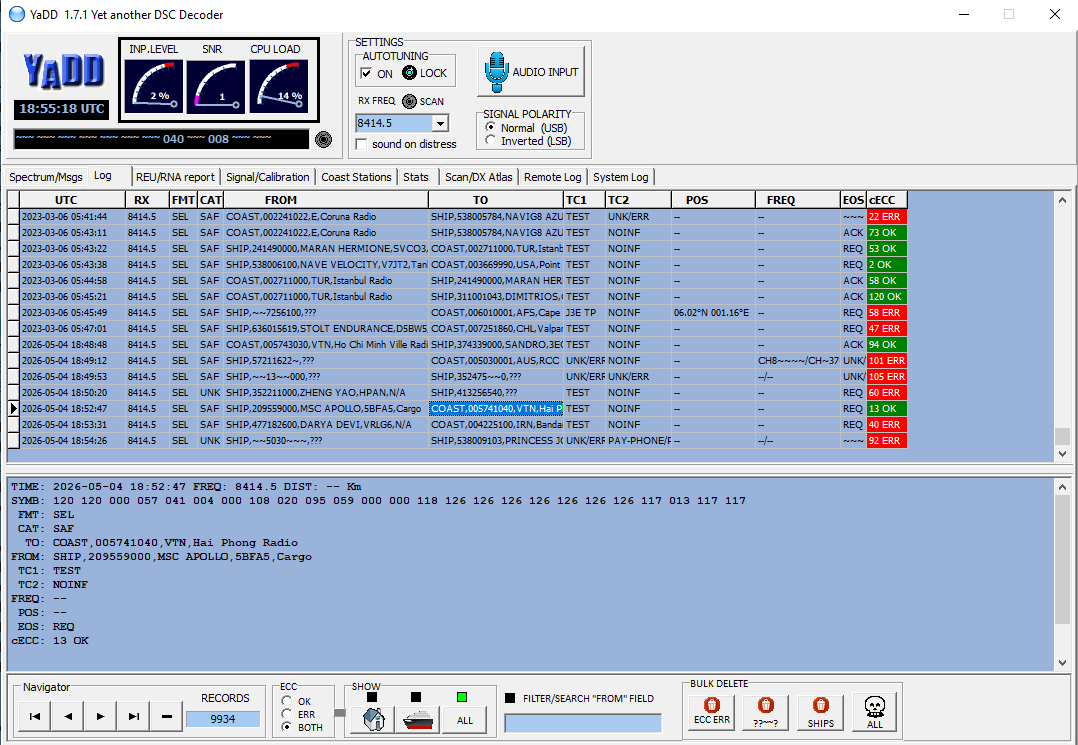
GMDSS / DSC Maritime Calls
Digital Selective Calling is part of the Global Maritime Distress and Safety System.
Unlike voice traffic, DSC consists of short structured digital calls containing identifiers and signalling information.
Signal Characteristics
| Parameter | Value |
|---|---|
| MF/HF channels | 2187.5, 4207.5, 6312, 8414.5, 12577 and 16804.5 kHz |
| Mode | F1B / J2B |
| Speed | 100 baud |
| Shift | 170 Hz |
| Audio centre | approximately 1700 Hz |
| Content | Maritime DSC calls and signalling |
The short bursts are relatively easy to recognise once their characteristic sound and waterfall pattern are familiar.
Receiving and Decoding
Programs such as YaDD, MultiPSK and SeaTTY can decode DSC calls.
An SDR is particularly useful because several calling frequencies can be checked quickly when propagation changes.
OE6VAG Reception Example
HF Time and Frequency Stations
Standard-frequency and time-signal stations are useful both as signals in their own right and as indicators of HF propagation.
Their fixed frequencies and highly structured transmissions also make them convenient for receiver tests and signal-analysis experiments.
Selected Stations
| Station | Frequencies | Notes |
|---|---|---|
| WWV | 2.5, 5, 10, 15 and 20 MHz | US time and frequency standard |
| CHU | 3330, 7850 and 14670 kHz | Canadian time station |
| RWM | 4996, 9996 and 14996 kHz | Russian standard-frequency and time station |
Depending on the station, the signal may contain carriers, tones, second or minute markers, voice announcements and encoded timing information.
RWM – 9996 kHz
RWM is particularly interesting because its transmission contains several distinct timing sequences.
These include second and minute timing signals as well as coded information from which DUT1 / UT1−UTC information can be derived.
For ordinary listening or propagation checks, no special decoder is required. More detailed analysis can be performed from recorded audio or IQ data.
OE6VAG Autonomous Reception
RWM on 9996 kHz is now monitored continuously by the OE6VAG multi-channel HF receiver.
A dedicated local decoder analyses the received timing patterns and publishes the current transmission state and decoded Earth-rotation information.
👉 Autonomous Radio Monitoring Stations
👉 HF Multi-Channel Receiver – Technical Details
HF VOLMET Aviation Weather Broadcasts
VOLMET broadcasts provide meteorological information to aircraft in flight.
Although the transmission itself is ordinary SSB voice, VOLMET belongs naturally to utility monitoring because it is a scheduled operational aviation service.
Signal Characteristics
| Parameter | Value |
|---|---|
| Example station | Shannon VOLMET |
| Shannon frequencies | 3413, 5505, 8957 and 13264 kHz |
| Mode | USB voice |
| Typical bandwidth | approximately 2.5–3 kHz |
| Content | Aviation weather information |
VOLMET reception is strongly dependent on the selected frequency, time of day and current HF propagation.
No digital decoder is necessary. A normal SSB receiver, SDR or audio recorder is sufficient.
OE6VAG Reception Examples
Shannon VOLMET on 13264 kHz
Locally received Shannon VOLMET transmission on 13264 kHz USB.
St. Petersburg VOLMET on 6617 kHz
Locally received St. Petersburg VOLMET transmission on 6617 kHz USB.
OE6VAG Autonomous Reception
Shannon VOLMET on 8957 kHz USB is also received continuously by the shared RSPdx / KA9Q-Radio HF system.
The locally received speech audio is encoded as Opus and made available as a live web stream.
👉 VOLMET on the Live Data page
👉 Open the Shannon VOLMET Live Receiver
👉 Autonomous Radio Monitoring Stations
👉 HF Multi-Channel Receiver – Technical Details
Russian Single-Letter Channel Markers
Single-letter channel markers are HF stations transmitting repeated Morse letters on fixed frequencies.
They are sometimes called single-letter beacons or cluster beacons.
Several transmitters can occupy closely spaced channels, which makes them particularly interesting to observe with an SDR waterfall.
Signal Characteristics
| Parameter | Value |
|---|---|
| Example clusters | around 3594, 4558, 5154, 7509, 8495 and 10872 kHz |
| Mode | CW / OOK Morse |
| Content | Repeated single-letter identifiers |
| Bandwidth | Very narrow |
Not every channel is active continuously.
The signals are useful for propagation observations and for learning to identify narrowband HF transmissions.
Receiving
No specialised decoder is required.
The marker can be copied by ear, with a CW decoder or simply observed in the waterfall.
OE6VAG Reception Example
Channel Marker S – Severomorsk / Arkhangelsk area on 13527.9 kHz
Example of a received Russian single-letter channel marker.
DWD / Pinneberg Weather Fax
HF radiofax converts an analogue audio signal into weather charts, pressure maps, forecasts and other graphical meteorological products.
It is one of the most visually rewarding HF utility modes because the result of reception is immediately visible.
Signal Characteristics
| Parameter | Value |
|---|---|
| Station | DWD / Pinneberg |
| Example frequencies | 3855, 7880 and 13882.5 kHz |
| Mode | F1C radiofax |
| Typical setting | 120 LPM / IOC 576 |
| Content | Maritime weather charts |
The receiver is normally operated in SSB mode with an offset so that the transmitted fax tones appear at the correct audio frequencies.
Receiving and Decoding
Programs such as fldigi, SeaTTY, JVComm32 and dedicated WEFAX decoders can reconstruct the transmitted image.
Correct phasing, line timing and frequency stability are important. Poor HF propagation can produce missing lines, slanted images or visible noise patterns.
OE6VAG Reception Example
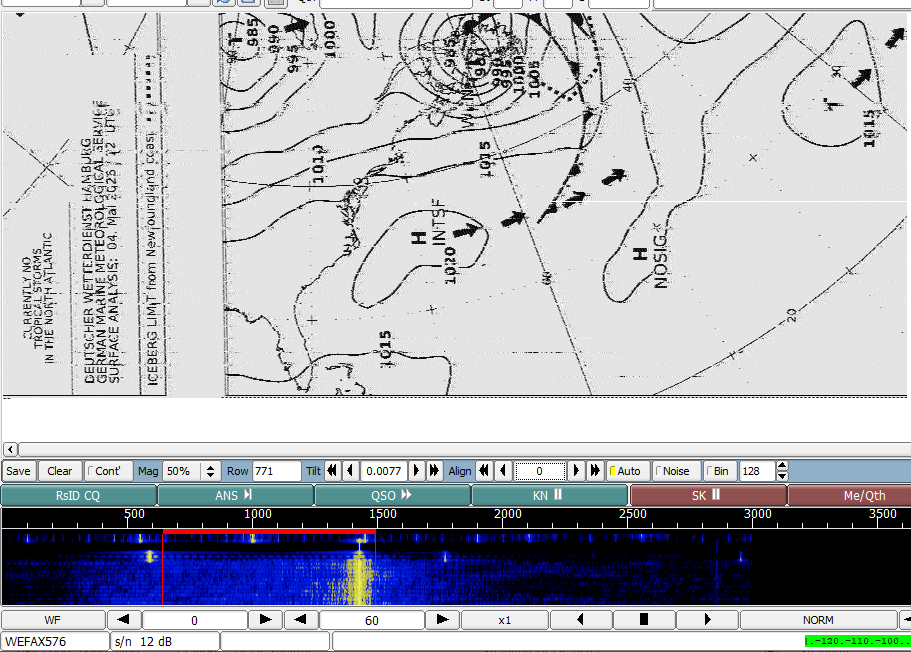
This screenshot documents an earlier interactive reception example. The current autonomous receiver uses a different processing chain.
OE6VAG Autonomous Reception
DDK3 on 7880 kHz is now received automatically through the common RSPdx / KA9Q-Radio platform.
The current unattended processing uses Ilma, which performs start detection, phasing, line synchronisation and timing-drift correction before producing the final PNG weather chart.
👉 Open the latest DWD WEFAX reception
👉 Autonomous Radio Monitoring Stations
👉 HF Multi-Channel Receiver – Technical Details
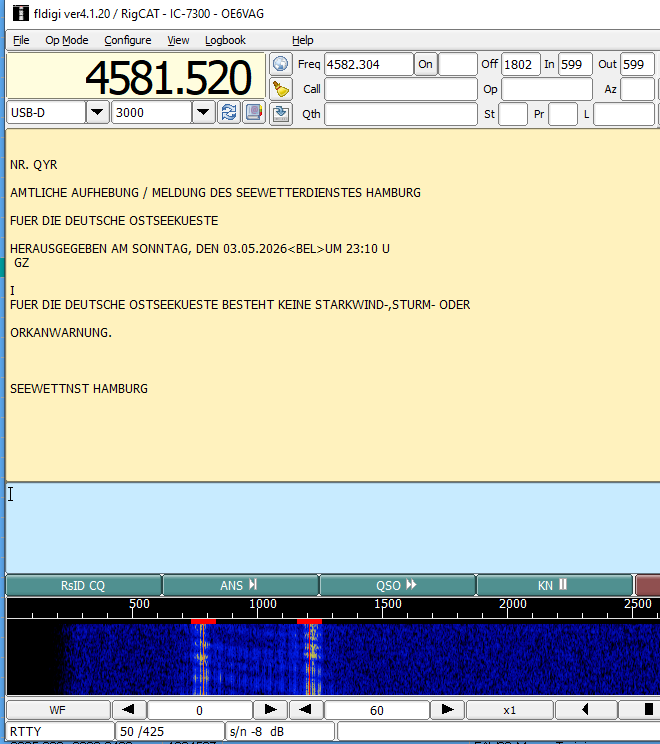
DWD / Pinneberg HF RTTY Weather Telex
In addition to weather fax, DWD transmits text-based marine weather information using RTTY.
These transmissions are good examples of classic narrowband HF FSK reception.
Signal Characteristics
| Parameter | Value |
|---|---|
| Example frequencies | 4583, 7646, 10100.8, 11039 and 14467.3 kHz |
| Mode | F1B RTTY |
| Speed | 50 baud |
| Shift | typically ±225 Hz |
| Content | Marine weather reports, warnings and forecasts |
Receiving and Decoding
fldigi and MultiPSK are both suitable for decoding these transmissions.
Incorrect sideband selection or reversed mark/space polarity can result in unreadable text even when the signal itself is strong.
OE6VAG Reception Example
OE6VAG Autonomous Reception
A DWD HF RTTY channel around 10100.8 kHz is continuously received by the autonomous HF station.
The decoded text is also processed for SYNOP and SHIP meteorological observations, which are converted into geographic data for the live map.
👉 DWD RTTY and SYNOP on the Live Data page
👉 Autonomous Radio Monitoring Stations
👉 HF Multi-Channel Receiver – Technical Details
STANAG and MIL-STD HF Data Signals
Many professional, governmental and military HF transmissions use standardised modem waveforms based on STANAG, MIL-STD-188 and related specifications.
These signals are useful subjects for technical signal observation even when the transmitted message content is encrypted or otherwise unavailable.
The purpose here is therefore signal identification and waveform observation, not the interception or interpretation of protected communications.
Typical Characteristics
| Parameter | Value |
|---|---|
| Service type | Military, governmental and professional HF links |
| Frequency range | Throughout the HF spectrum |
| Waveform families | STANAG, MIL-STD-188 and related standards |
| Modulation | Often PSK-based |
| Typical bandwidth | Frequently around 3 kHz, depending on waveform |
| Content | Often encrypted or otherwise not publicly decodable |
Signal Observation
An SDR waterfall is useful for measuring:
- centre frequency
- occupied bandwidth
- transmission duration
- apparent symbol structure
- idle patterns
- frequency stability
Signal-analysis software can sometimes identify likely waveform families or symbol rates.
The observation remains limited to technical characteristics of the radio signal.
HFDL – HF Aircraft Data Link
HFDL is a digital aeronautical data-link system used for communication between aircraft and ground stations over HF.
Unlike VHF ACARS or ADS-B, HF propagation allows reception of aircraft and ground stations over very large distances.
HFDL can transport several types of aeronautical data, including AOC/ACARS traffic, CPDLC and ADS-C position information.
Signal Characteristics
| Parameter | Value |
|---|---|
| Frequency range | HF aeronautical bands |
| Modulation | PSK2 / PSK4 / PSK8 |
| Symbol rate | 1800 baud |
| Occupied bandwidth | approximately 400 Hz |
| Content | Aircraft data-link messages and position reports |
Multiple HFDL frequencies are used by ground stations, with aircraft changing channels according to propagation and network requirements.
Receiving and Decoding
A stable SSB receiver or SDR is required.
Software such as dumphfdl can demodulate and decode HFDL directly from IQ data. PC-HFDL is another useful decoder for interactive reception and analysis.
OE6VAG Reception Example
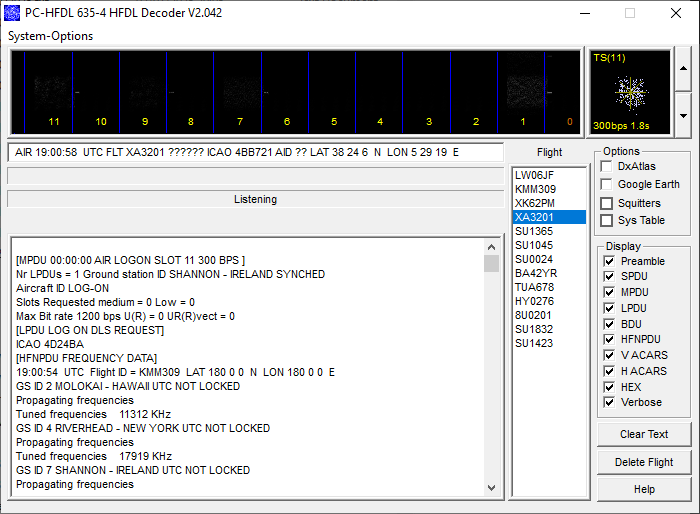
This is an interactive reception example and is intentionally retained here even though the current autonomous implementation uses a different receiver architecture.
OE6VAG Autonomous Reception
Several HFDL channels are now monitored simultaneously by the RSPdx / KA9Q-Radio HF platform.
Three wider virtual IQ receivers each contain groups of nearby HFDL channels. Independent dumphfdl processes decode these groups, after which aircraft positions are extracted and published as GeoJSON.
👉 Autonomous Radio Monitoring Stations
👉 HF Multi-Channel Receiver – Technical Details
DRM Shortwave Broadcasts
Digital Radio Mondiale is a digital broadcasting system rather than a utility-radio service in the strict sense.
It is nevertheless included because it is an interesting example of a relatively wide digital HF waveform that requires suitable receiver bandwidth, good frequency stability and software decoding.
Signal Characteristics
| Parameter | Value |
|---|---|
| Frequency range | LW, MW and shortwave broadcast bands |
| Typical HF bandwidth | 9 or 10 kHz |
| Modulation | COFDM |
| Content | Digital audio, text and data |
| Reception requirement | Stable receiver, suitable bandwidth and sufficient SNR |
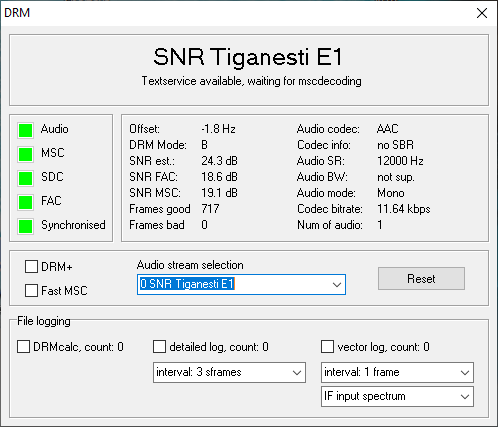
DRM reception can change very quickly with fading. A signal that looks strong in the waterfall may still fail to decode if the multipath conditions are poor.
Receiving and Decoding
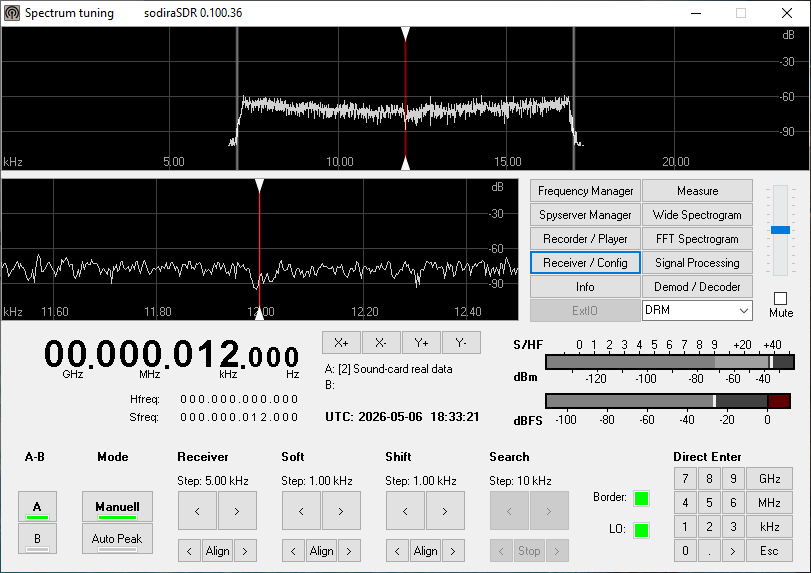
Software receivers include Dream and SodiraSDR.
The IC-7300 can also be used as the RF front end by making its IF signal available to suitable decoder software.
For this configuration:
SET → Connectors → ACC/USB Output Select → IF
OE6VAG Reception Example
Audio Example
Radio Romania International with SodiraSDR and IC-7300 on 13690 kHz
Decoded DRM audio from Radio Romania International.
FT8 Amateur Radio Propagation Monitoring
FT8 is an amateur-radio weak-signal mode rather than a utility service.
It is included because the very high worldwide activity on fixed dial frequencies makes FT8 an excellent tool for observing propagation and evaluating receiving-system performance.
Signals that are barely audible — or not audible at all — can often still be decoded.
Signal Characteristics
| Parameter | Value |
|---|---|
| Service | Amateur radio |
| Mode | FT8 |
| Modulation | 8-GFSK |
| Occupied bandwidth | approximately 50 Hz per signal |
| Transmission period | 15 seconds |
| Content | Callsigns, locators, reports and short messages |
| Receiver mode | USB |
| Example dial frequencies | 3.573, 7.074, 10.136, 14.074, 18.100, 21.074 and 28.074 MHz |
Receiving and Decoding
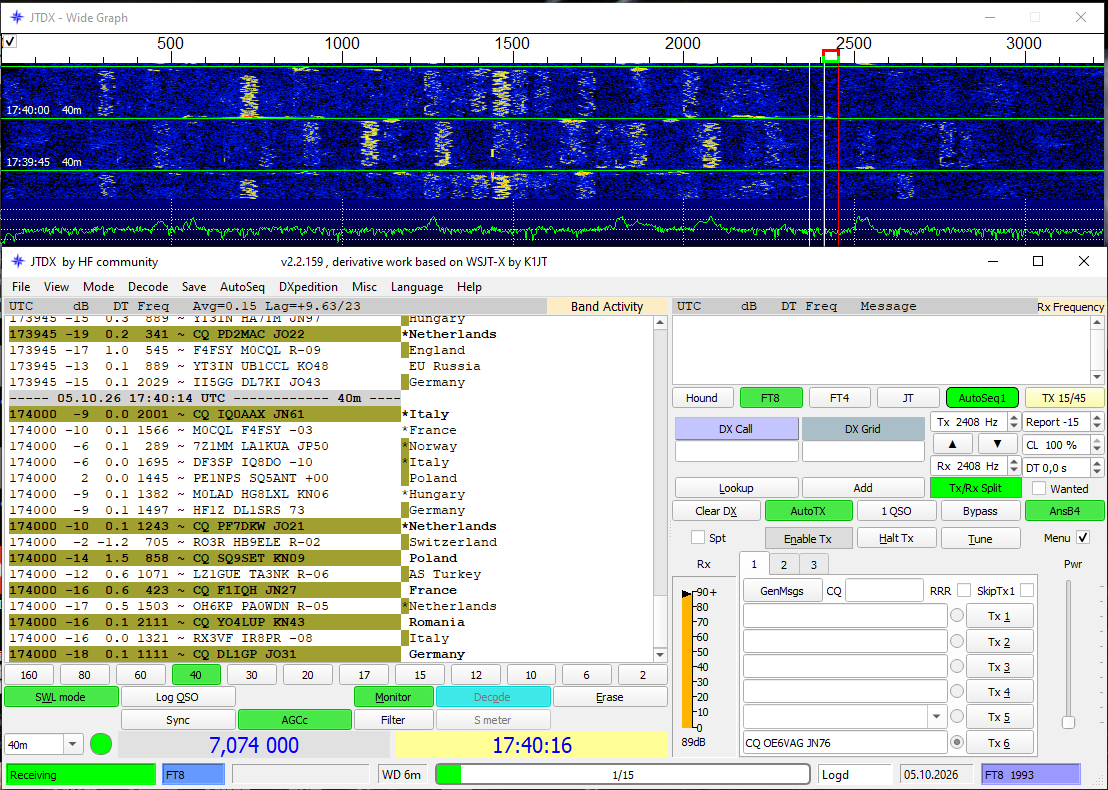
WSJT-X is the standard software package for FT8 reception and operation. JTDX can also be used.
For manual reception, the IC-7300 can provide both CAT control and USB audio directly to a computer.
PSK Reporter and similar services make it possible to visualise received stations and propagation paths.
OE6VAG Reception Example
OE6VAG Autonomous Reception
The autonomous HF station continuously monitors FT8 on 30 metres at a 10.136 MHz USB dial frequency.
A narrow KA9Q virtual receiver feeds the WSJT-X jt9 decoder. Decoded calls are processed locally and selected reception reports are forwarded to PSK Reporter.
👉 Autonomous Radio Monitoring Stations
👉 HF Multi-Channel Receiver – Technical Details
WSPR Amateur Radio Propagation Monitoring
WSPR — the Weak Signal Propagation Reporter — was designed specifically for measuring radio propagation with very low-power narrowband transmissions.
A WSPR message carries the transmitting station's callsign, Maidenhead locator and transmitter-power information.
Because transmissions occur continuously around the world, WSPR provides a useful long-term view of HF propagation.
Signal Characteristics
| Parameter | Value |
|---|---|
| Service | Amateur radio |
| Mode | WSPR |
| Modulation | 4-FSK |
| Occupied bandwidth | approximately 1.5 Hz |
| Transmission duration | approximately 110 seconds |
| Message content | Callsign, locator and transmitter power |
| Receiver mode | USB |
| 30 m dial frequency | 10.138700 MHz |
The extremely narrow signal bandwidth allows reception at very low signal-to-noise ratios.
Receiving and Decoding
WSPR is supported by WSJT-X and can also be decoded directly with the command-line wsprd decoder.
Received spots can be used to analyse:
- propagation distance
- signal-to-noise ratio
- geographic coverage
- day/night changes
- long-distance openings
- changes in receiver or antenna performance
OE6VAG Reception Example
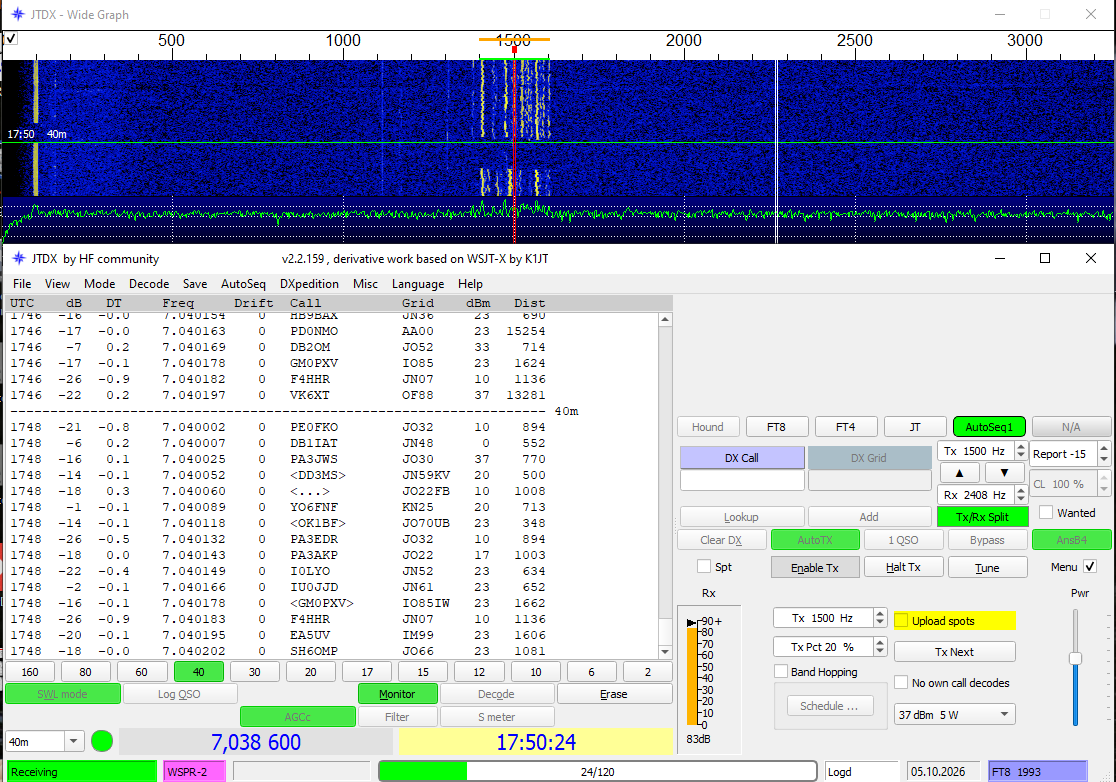
OE6VAG Autonomous Reception
The OE6VAG HF station continuously monitors WSPR on the 30 m band.
A dedicated 12 kS/s KA9Q virtual receiver supplies the signal to wsprd. The resulting spots are stored and analysed locally to produce propagation maps and statistics.
👉 Open the WSPR 30 m Propagation Monitor
👉 Autonomous Radio Monitoring Stations
👉 HF Multi-Channel Receiver – Technical Details
SSTV Amateur Radio Image Transmissions
Slow Scan Television is an amateur-radio image-transmission mode that sends still pictures through a narrowband voice channel.
Although SSTV is neither a utility service nor an autonomous OE6VAG receiving service, it is an interesting example of software-based signal decoding on HF.
Signal Characteristics
| Parameter | Value |
|---|---|
| Service | Amateur radio |
| Mode | SSTV |
| Modulation | Analogue audio tones over SSB |
| Typical HF bandwidth | approximately 2.5–3 kHz |
| Common modes | Martin M1, Scottie S1, Robot and PD modes |
| Content | Still images, callsigns and captions |
| Example HF activity frequencies | 3.730, 7.171, 14.230, 21.340 and 28.680 MHz |
The received picture is reconstructed line by line.
HF fading, interference and tuning errors therefore become immediately visible in the resulting image.
Receiving and Decoding
Programs such as MMSSTV, QSSTV, RX-SSTV and Robot36 can decode SSTV.
The IC-7300 can provide the received audio directly via USB, while an SDR can be useful for locating activity in the waterfall.
Manual Reception and Autonomous Monitoring
The examples on this page intentionally come from different generations and styles of radio reception.
Some are interactive experiments:
Antenna
   ↓
IC-7300 or SDR
   ↓
PC software
   ↓
operator
Others are now permanently automated:
Magnetic Loop
   ↓
SDRplay RSPdx
   ↓
KA9Q-Radio
   ↓
virtual receiver
   ↓
decoder
   ↓
local processing
   ↓
web publication
This distinction is intentional.
The permanent receiver architecture is documented separately so that this page can remain focused on the radio signals themselves.
Related OE6VAG Pages
👉 Autonomous Radio Monitoring Stations
👉 HF Multi-Channel Receiver – SDRplay RSPdx and KA9Q-Radio
👉 DCF77 Live – Technical Implementation
👉 DCF77 Meteotime Decoding – Technical Details
👉 VHF and UHF Radio Monitoring & Signal Decoding
About These Reception Examples
The examples on this page are part of a private, non-commercial radio and signal-processing project.
Where an OE6VAG reception example is shown, the screenshot, audio recording or decoded result originates from an actual reception experiment.
The purpose is to document practical radio reception, signal characteristics and decoding techniques — not to provide a complete frequency database.
Frequencies, schedules and active services can change over time. For operational or safety-critical information, always refer to the responsible official service.